

It was January of 1914. The winter in Detroit was bitterly cold, the kind of deep, biting freeze that makes the air feel brittle. Inside the Highland Park Ford Plant, Henry Ford gathered a group of shivering journalists to make an announcement. He was going to pay his workers five dollars a day.
At the time, the average wage for an autoworker was roughly two dollars and thirty-four cents. Ford was doing more than giving a raise. He was doubling the market rate. The financial world reacted with absolute horror. The Wall Street Journal called the move an economic crime. They said he was ruining the labor market. They said he was guaranteeing his own bankruptcy. He didn’t just shock the market. He broke it. And he broke it for a reason no one saw coming.
Even Historians Are Getting This Wrong
The conventional wisdom among historians is that Ford instituted the five dollar workday to stop worker turnover. Building cars on a moving assembly line was deeply unpleasant work. In 1913, Ford had to hire over fifty thousand men just to maintain a workforce of fourteen thousand. Men simply walked off the job. Paying them a premium was a way to keep them chained to the line.
But there is a problem with that theory. It is too small. It misses the genius of the man.
Henry Ford was not a philanthropist. He was a ruthless optimizer. He understood a very basic, often ignored mathematical truth about capitalism. Workers are more than an expense on a ledger. They are the market. If you pay a man two dollars a day, he cannot possibly afford to buy the automobile he is building. If you pay him five dollars, he suddenly becomes a customer. Ford realized that while he was building cars, he was also building a consumer class. He internalized the ecosystem.
Today’s Tech Executives Are Sleepwalking Off a Cliff
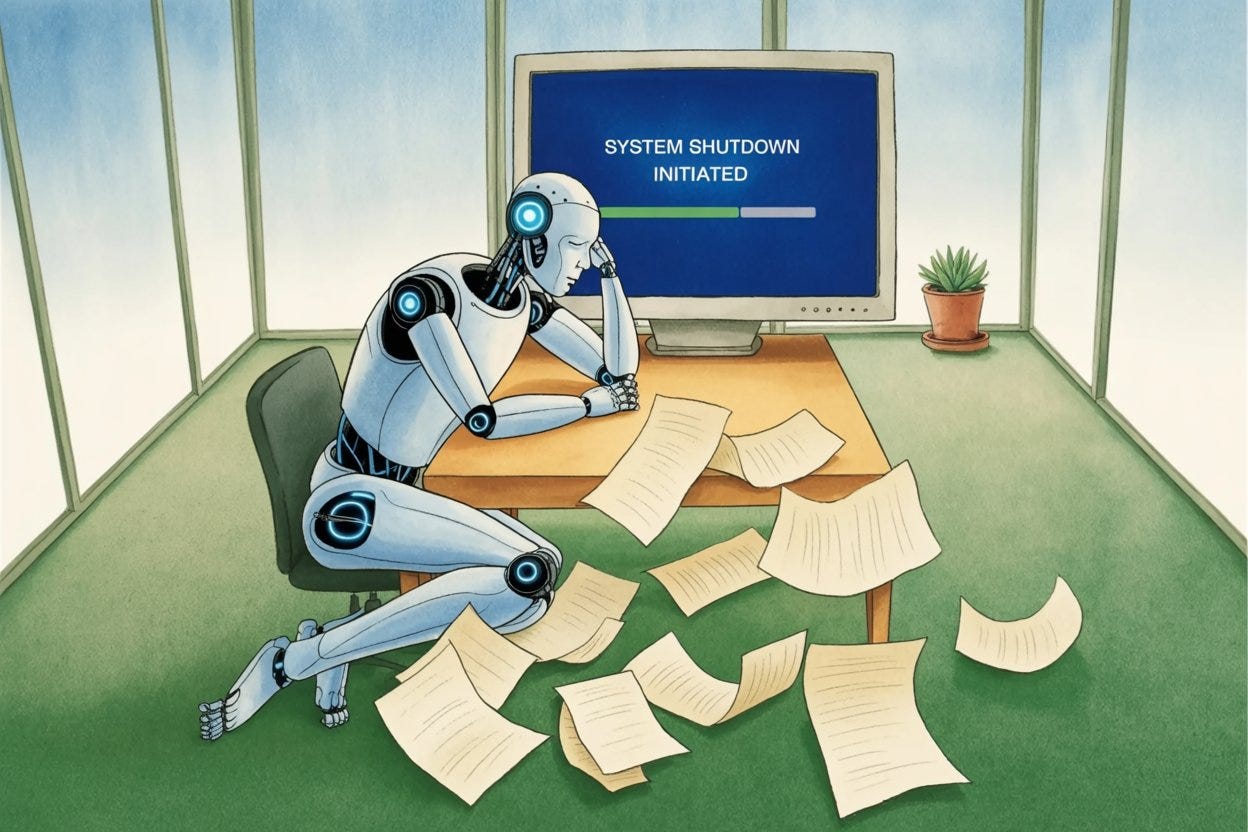
Fast forward to today, the spring of 2026. We are not building Model Ts anymore. We are building algorithms. Large Language Models. Generative AI. We are living through a technological revolution that promises unprecedented efficiency. Across the tech and service sectors, tens of thousands of workers have been laid off, with artificial intelligence explicitly cited as the primary reason.
When modern executives announce these layoffs, they use the language of inevitability. They cite efficiency. They cite agility. They cite the fiduciary duty to maximize shareholder returns. They believe they are doing the only rational thing a business leader can do.
But it turns out that isn’t true at all. They are walking blindly into a trap. And to understand why, we need to introduce a concept called “demand externality.” This is a spillover effect where one firm’s actions change other people’s or firms’ ability or willingness to buy in ways that the first firm does not fully consider.
The Hidden Economic Poison
The demand externality is what happens when a localized, seemingly rational business decision creates a decentralized economic disaster. It is the hidden ghost in the machine of modern automation.
Imagine a hypothetical, mid-sized software firm. Let us call them TechCorp. The CEO of TechCorp realizes that by implementing a new suite of AI tools, they can eliminate one thousand data entry and customer service jobs. The immediate math is intoxicating. The payroll drops by tens of millions of dollars. The AI software costs a fraction of that. Wall Street cheers. The stock price climbs. The CEO gets a massive bonus.
The CEO wins. The shareholders win. The algorithm wins.
But what happens to those one thousand workers? They lose their paychecks. Because they lost their paychecks, they stop going out to eat at local restaurants. They cancel their streaming subscriptions. They delay buying a new car. They buy fewer clothes.
Here is the trick. It’s not TechCorp’s revenues that decline. Consumers stop buying from everyone.
When TechCorp automates, it gets one hundred percent of the financial savings from firing those workers. But it only absorbs a tiny, microscopic fraction of the lost economic demand. The pain is spread out across the entire economy. TechCorp’s private calculation looks brilliant. Costs go down massively, but their own sales only fall a tiny bit.
How Ten Thousand “Rational” Decisions Add Up to a Catastrophe
Now, multiply TechCorp by ten thousand companies. This is the AI Layoff Trap. It is a classic Prisoner’s Dilemma, scaled up to the size of the global economy.
If every single CEO could sit in a room and agree to go slow on AI layoffs, they would all make more money in the long run. The consumer base would remain healthy. Demand would stay strong. But if one company decides to hold back, while its rivals automate aggressively, that cautious company gets undercut on price. They lose market share. They die.
So, the rational choice for the individual executive is to automate everything. Immediately. The competitive pressure pushes them over a cliff.
UBI, Retraining, Tax the Rich — None of It Will Save Us
When faced with this looming crisis, the public debate usually turns to a familiar set of progressive safety nets. We hear impassioned arguments for Universal Basic Income. We hear calls for heavy taxes on capital and corporate profits. We hear about massive, state-funded upskilling and retraining programs. They sound compassionate. They sound logical.
But there is a problem with those theories. They do not fix the machine.
A recent analysis, The AI Layoff Trap, by economists on this exact phenomenon tested these popular interventions. They looked at the underlying math of the demand externality. And the results were startling.
Take Universal Basic Income. A flat, guaranteed payment to everyone raises the overall spending floor of society. It keeps people from starving. That is undeniably a good thing. But it does absolutely nothing to change the marginal incentive for the CEO of TechCorp. When that executive looks at a spreadsheet to decide between keeping a human employee or buying an algorithm, the AI is still cheaper. The incentive to over-automate remains the same
The same is true for taxing corporate profits. You can tax the billionaires and redistribute the wealth. But at the exact moment of decision, the math still tells the company to replace the worker. UBI cushions the fall. Retraining shifts the burden. Profit-sharing spreads the pain. Nonetheless, none of them hit the precise lever that is broken. None of them change how attractive that “one more layoff” looks to a single firm.
The One Policy Nobody Wants to Talk About — But Has to
To fix the trap, we need something far more targeted. We need a Pigouvian Automation Tax.
A Pigouvian tax, named after the British economist Arthur Pigou, is designed to fix a very specific type of market failure. You do not levy this tax to raise money for bridges or schools. You levy it to make a hidden cost visible. If a factory dumps toxic sludge into a river, a Pigouvian tax forces the factory to pay for the environmental cleanup. It forces them to internalize the damage.
If a company automates a job today, it is dumping economic sludge into the river of consumer demand. The Pigouvian Automation Tax is a highly targeted charge on each specific unit of work that a firm automates. It is set roughly equal to the demand loss that the firm imposes on everyone else when it replaces a human worker.
When you implement this tax, everything changes. The CEO runs the numbers again. Suddenly, the AI is no longer artificially cheap. The private payoff of automating that task finally aligns with the collective, societal payoff.
This is crucial to understand. This tax is not about stopping artificial intelligence. It is not about freezing technology in place or protecting obsolete jobs. Companies will still automate. But they will only automate when the technology is genuinely, transformatively better. They will not automate just to extract a quick, destructive margin at the expense of the wider economy.
You Cannot Sell to a Graveyard
Let us return to that freezing day in Detroit in 1914. Henry Ford did not double his workers’ wages because he wanted to be a hero. He did it because he understood that a factory is not an island. A business requires a delicate, reciprocal relationship with the society that surrounds it. You cannot extract indefinitely. At some point, you have to cultivate.
Today, estimates suggest that large language models expose tasks in roughly eighty percent of all jobs in the United States to some degree of automation. The stakes are profoundly high. We are letting the dazzling allure of artificial intelligence blind us to the basic physics of our economy.
If we treat workers merely as costs to be eliminated, if we let the Prisoner’s Dilemma run unchecked, we will wake up in a world of brilliantly efficient, fully automated corporations that produce goods no one can afford to buy. We do not need to stop the future from arriving. We just need to make sure we have customers waiting for us when we get there.
Reference
Falk, Brett Hemenway, and Gerry Tsoukalas. "The AI Layoff Trap." arXiv preprint arXiv:2603.20617 (2026).