


There is a Catch-22 in modern robotics: we demand perfection, yet we cannot afford the failures necessary to achieve it. Real-world testing for assets like autonomous vehicles is too slow, too expensive, and too dangerous to be sustainable. Crashing a million-dollar prototype just to find its breaking point isn’t valid testing—it’s an unscalable dead end.
Consequently, high-fidelity simulation has become the bedrock of modern validation efforts. By creating photorealistic, physics-accurate virtual worlds, engineers can rack up millions of testing miles without ever turning a physical wheel. However, migrating from software testing to total system simulation introduces a profound challenge: the chaos of the physical world.
Pure software is deterministic; robotics is chaotic. While digital inputs yield predictable outputs, physical robots face changing friction, sensor noise, and unpredictable environments where no two experiments are identical. Relying on ‘happy path’ simulations in nominal conditions is therefore inadequate for proving safety. True reliability requires moving beyond verification to adversarial discovery—actively breaking the system to uncover hidden failure modes.
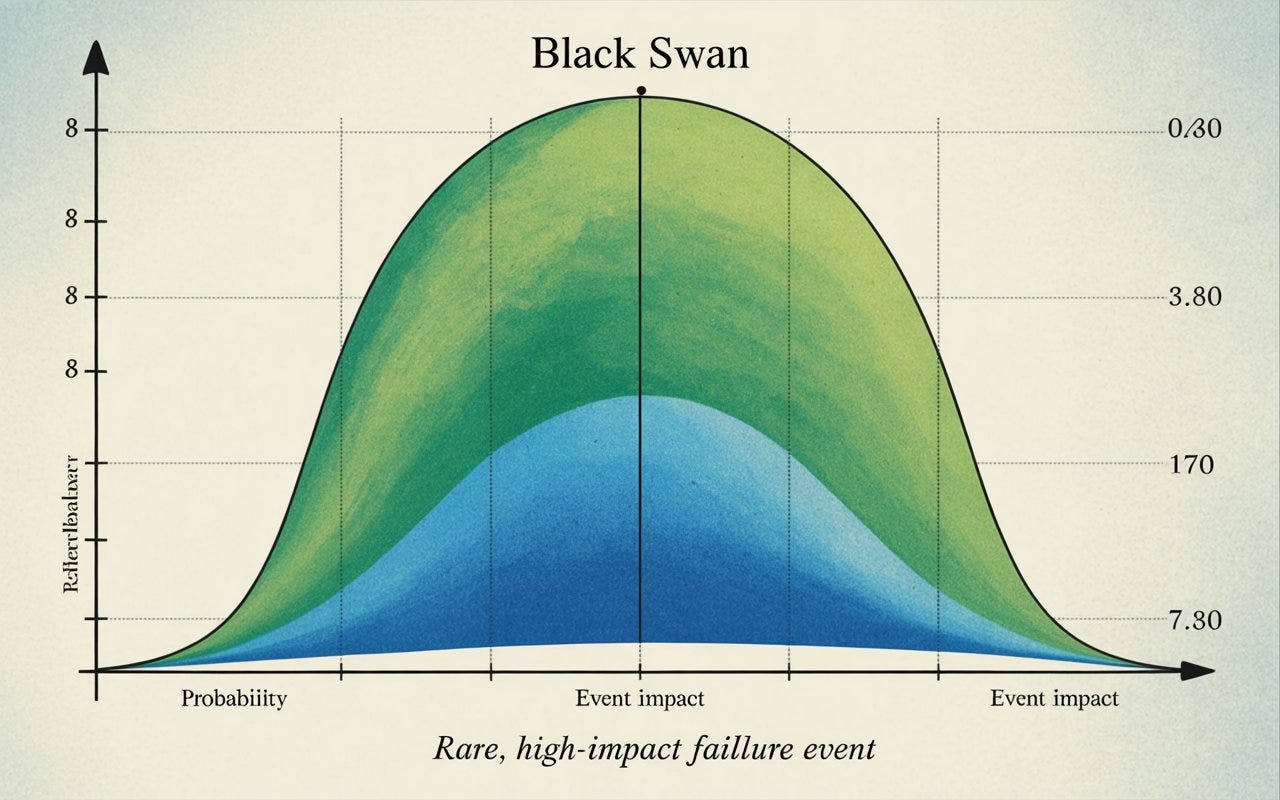
In engineering terms, a Black Swan is a rare, high-impact failure event that lies at the extreme edges of probability distributions. These are the scenarios that traditional testing rarely encounters: the exact combination of blinding low sunlight, a reflective patch of ice, and a simultaneous radar glitch that causes an autonomous vehicle’s controller to fail. Waiting for these events to occur randomly in a simulation, even one running 24/7, is statistically inefficient.
The solution lies in “Black Swan generators”—algorithms built to break the system rather than validate it.
These tools flip the script on optimization. Instead of helping the robot succeed, the algorithm acts as an adversary, manipulating the environment to force a failure. It scans millions of variables—from weather shifts to sensor glitches—searching for the specific combination that causes the robot to crash. This digital stress test exposes the system’s breaking points in simulation so they can be fixed before deployment.
The power of this method is in the actionable data it yields. Every failure generated is a perfectly reproducible data point, allowing teams to replay the event, trace the error to a specific line of code, and patch the vulnerability. This approach fundamentally shifts the engineering question from ‘Will it work?’ to ‘What makes it break?’ By actively surfacing and fixing these edge cases in simulation, we immunize the system against catastrophic failure before a single prototype enters the real world.
This methodology achieves its fullest potential when coupled with the concept of fleet learning. While a simulation can generate billions of variations, the real world remains the ultimate generator of novelty.
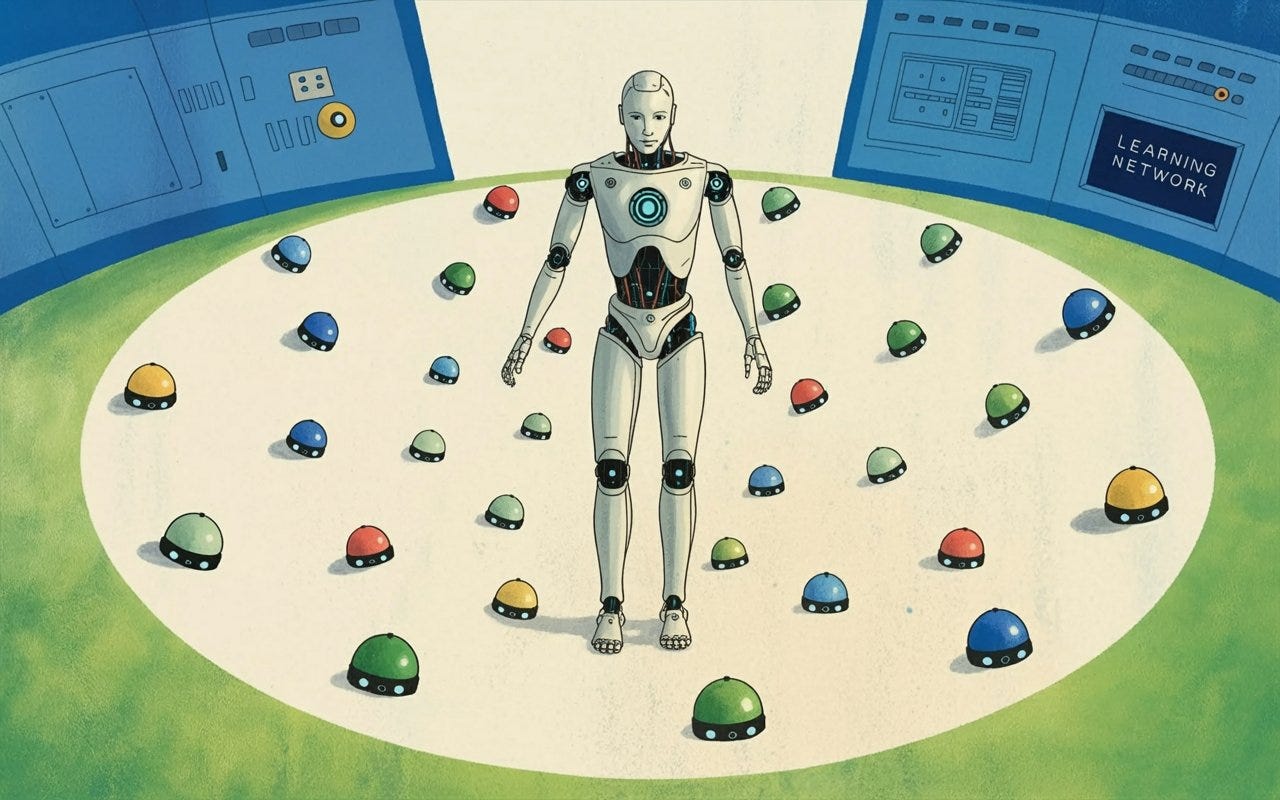
The cycle completes when the real world informs the digital one. When a deployed fleet encounters an anomaly—whether a disengagement or a near-miss—that data is immediately captured and ingested into the simulation engine. The Black Swan generator treats this real-world ‘weirdness’ as a seed, extrapolating thousands of variations from that single data point. This ensures the updated software is robust not just against the specific event that occurred but against the entire category of related edge cases.
Through fleet learning, the isolated experience of one machine becomes the collective wisdom of millions. By continuously looping real-world data back into the simulation, we create systems that don’t just survive the probable—they are immune to the improbable.