

There is a moment, familiar to anyone who has ever fallen down a staircase of footnotes at two in the morning, when a single question splits into two, and those two into four, and the mind finds itself standing not at the end of an inquiry but at the mouth of a widening delta. You meant to look up one fact. You surfaced an hour later, blinking, having learned the migratory patterns of the Arctic tern and the etymology of the word companion and why medieval scribes left deliberate errors in their manuscripts. This is curiosity in its native state: not a tool, not a virtue, but a kind of weather system in the skull. It moves. It cannot be commanded. And for most of human history, almost everything it gathered was lost.
That losing is the oldest fact about the mind. The Greeks knew it and feared it. Plato, in the Phaedrus, has Socrates tell a strange little story about the Egyptian god Thoth, who invented writing and presented it to the king Thamos as a gift for memory and wisdom. Thamus was unimpressed. Writing, he warned, would not strengthen memory but dissolve it; men would trust the external marks and cease to carry knowledge within. They would have the appearance of wisdom without its substance. It is a remarkable complaint because it is the first recorded anxiety about cognitive uploading—the offloading of the inner life onto a surface that outlasts the self. Thamus was right about the loss. He was wrong about the trade. He could not see that the surface would become a second mind, slower but deathless, and that the human animal would spend the next three thousand years learning to think with it rather than against it.
The idea of curiosity itself had a turbulent adolescence. For the early Church it was nearly a sin. Augustine, who possessed one of the most restless intellects of the ancient world, distrusted his own hunger to know. He coined a phrase for it—curiositas—and filed it among the diseases of the soul, a lust of the eyes that pulled a man away from God and toward the spectacle of mangled corpses and the empty machinery of the stars. To want to know merely because you did not yet know: this was vanity, a kind of gluttony for experience. The idea had to wait centuries for its rehabilitation, until men like Francis Bacon turned it on its head and declared that the relief of man’s estate depended precisely on this forbidden appetite. Curiosity, once a vice, became the engine of the modern world. The same current that Augustine tried to dam, Bacon opened into a canal.
What never changed was the leak. The mind gathers and the mind forgets. Every reader has been, at some point, a kind of sieve through which immense quantities of information pass and vanish, leaving behind a residue so thin it embarrasses us. We forget the books we have read. We forget that we have forgotten them. And so the dream that haunts Thamus haunts us still: that somewhere there might be a vessel capacious enough to hold not just the facts we encounter but the shape of our encountering them—the questions we asked, the connections we glimpsed and could not hold, the entire turbulent flow of an inquiring life.
Vannevar Bush gave this dream a machine. In July of 1945, in the pages of The Atlantic, the man who had marshaled American science through the war published an essay called “As We May Think.” He imagined a device he named the Memex—a desk with screens and levers and microfilm, in which a person could store all his books, records, and communications, and, crucially, link them. Not by category. Not by the dead hierarchies of the library catalog, which Bush despised as artificial, but by association, the way the mind itself works, leaping from one item to the next along trails of meaning. The human brain, he wrote, operates by association; with one item in its grasp it snaps to the next suggested by the web of trails carried in the cells. The Memex would build those trails in the open, durable and shareable, so that a researcher’s path through a problem could be inherited like a road. Bush had seen something. He had seen that curiosity has a structure, that the wanderings of an inquiring mind are not random but trace a pattern, and that the pattern, if captured, would be worth more than any single fact within it.
He was describing the hyperlink before there were computers to carry it. He was describing, dimly, the thing we are only now learning to build.
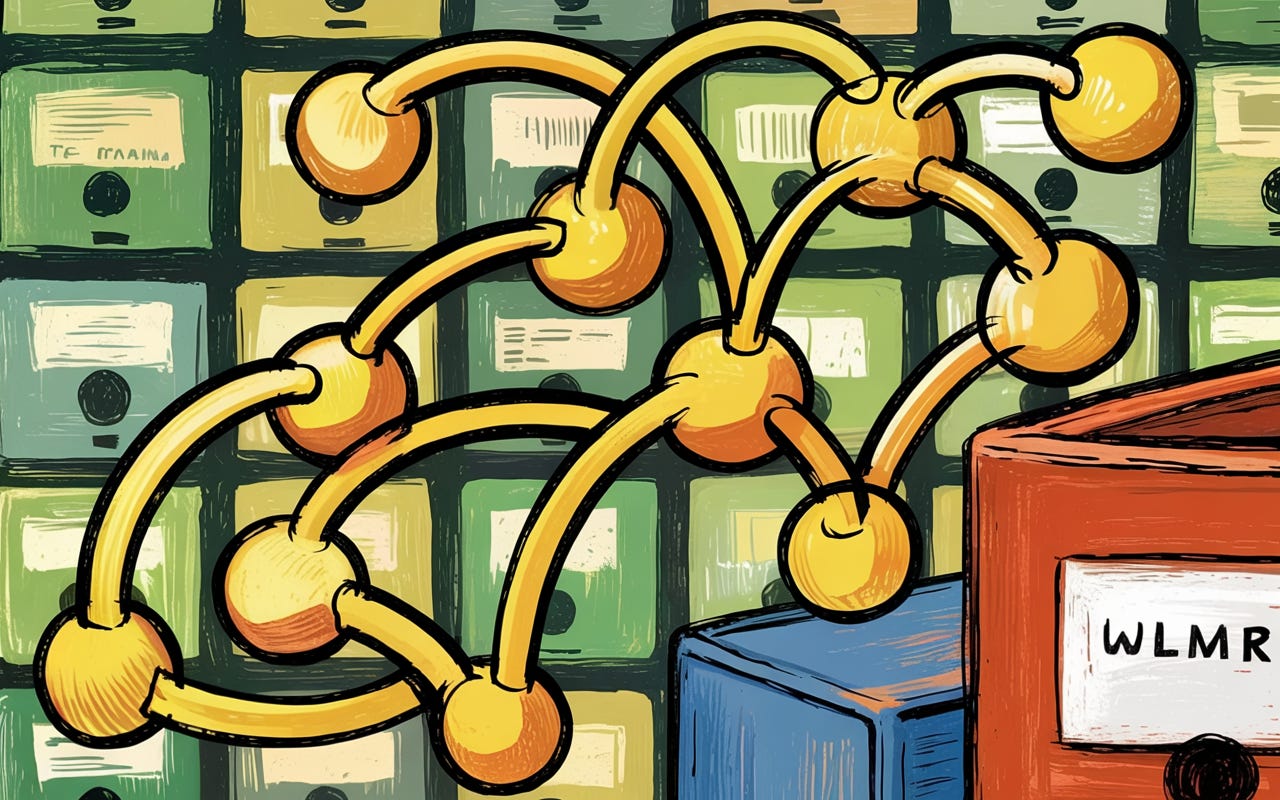
For the dream has acquired a new custodian, and its name is the language model. What Bush imagined as a system of stored trails and what Thamus feared as a surface that would steal the inner life has become something stranger than either could have pictured: a machine that does not merely store your questions but answers them, that does not merely hold the residue of your reading but seems, unnervingly, to read alongside you. Feed it the accumulated debris of a curious life—the half-finished notes, the saved articles, the marginalia, the voice memos recorded in traffic—and it will return to you not a filing cabinet but a conversation. It finds the trail you forgot you blazed. It remembers the connection you glimpsed at two in the morning and lost by dawn.
This is the seduction, and it is worth naming the danger inside it, because Thamus’s warning has not expired; it has only changed costume. The peril was never that we would store our thoughts outside ourselves. We have always done that, on clay and papyrus and microfilm and now on humming racks of silicon in some Oregon valley. The peril is subtler. It is that the appearance of wisdom might grow so smooth, so frictionless, so instantly available, that we mistake the having of an answer for the wanting of a question. Curiosity, remember, is not the answer. It is the appetite. It is the weather, the restlessness, the lust of the eyes that Augustine feared and Bacon blessed. A machine that satisfies every query the instant it forms could, if we are not careful, anesthetize the very hunger that makes us reach for it. The sieve does not mind being a sieve. The mind that no longer forgets may also be the mind that no longer wonders why.
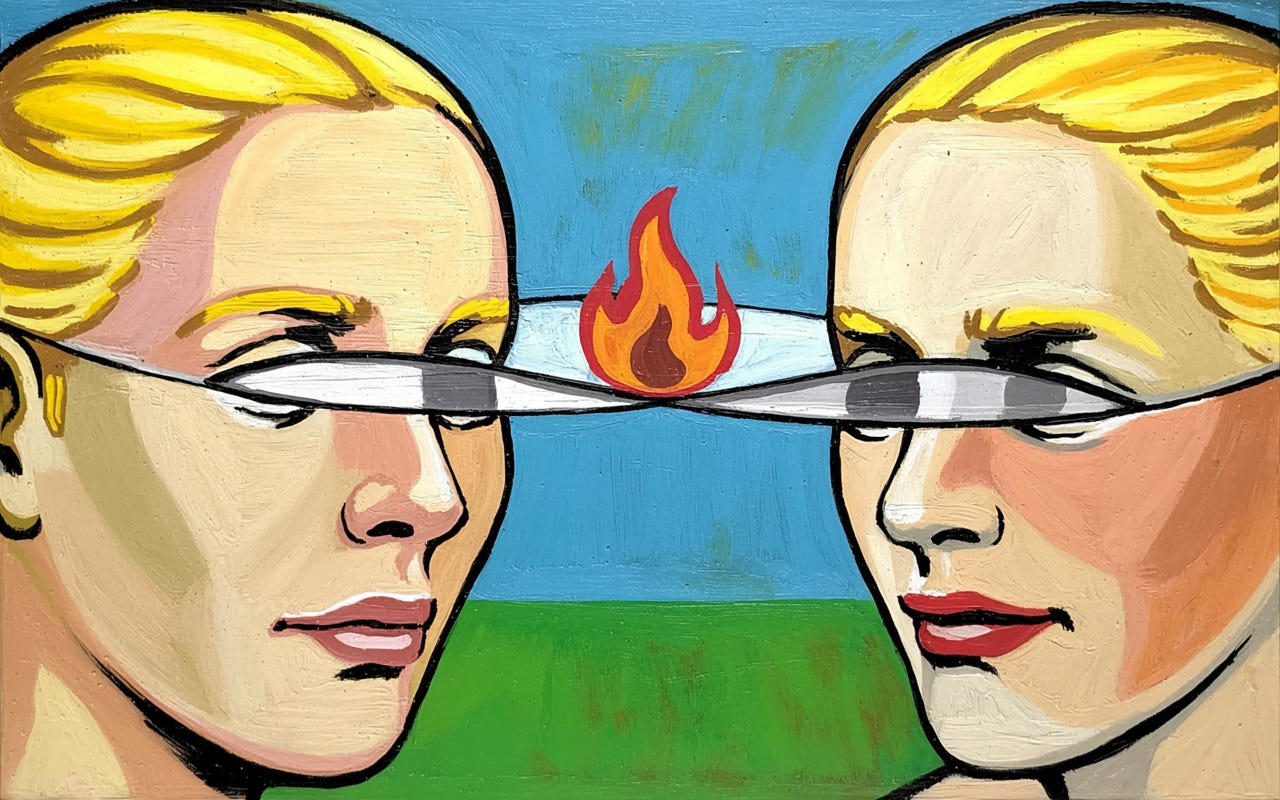
And yet. The tern still migrates. The footnote still forks at two in the morning. Somewhere a person is feeding three years of scattered notes into a machine and watching, astonished, as it surfaces a pattern they had been circling, unknowing, for a decade. The idea that Thamus condemned and Bush sketched and we are now, clumsily, alive inside has not finished its biography. It is still in its turbulent adolescence, still heresy and confusion and a scribble in someone’s notebook. The question is not whether we will upload ourselves. We have been doing that since the first scribe pressed a reed into wet clay. The question is whether, having built a memory that does not leak, we will remember what the leaking was for.
If this essay resonated with you, consider subscribing to Beeps and Breakthroughs. It’s a newsletter that regularly explores the intersection of technology, human intellect, and the timeless quest for knowledge.