

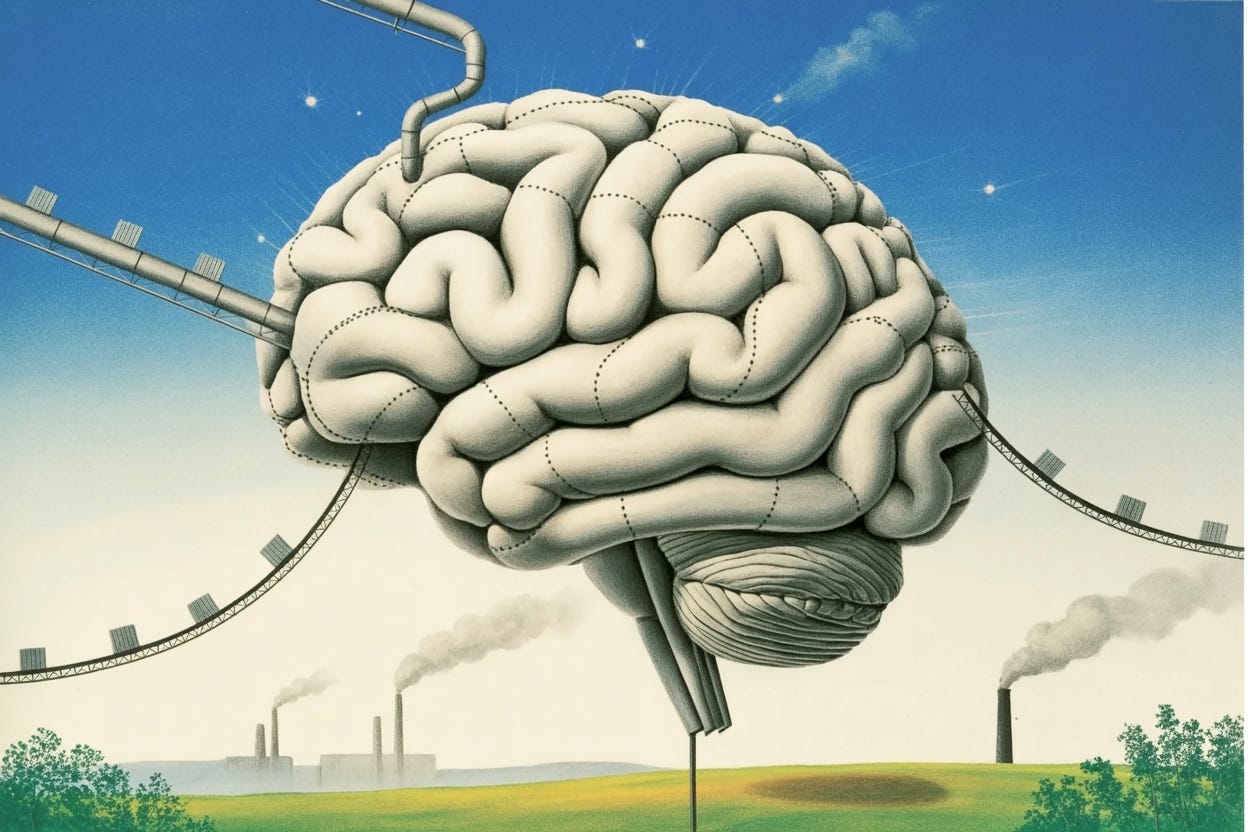
For the better part of a century, the factory floor was a temple to the straight line. Henry Ford’s logic, severe and undeniable, dictated that efficiency was a geometry problem. The machine lived here; the human lived there; the product moved between them on a track that tolerated no deviation. It was a Newtonian universe—predictable, clockwork, and blind. If a robot arm swung left, it swung left because a line of code commanded it, regardless of whether a human skull or a car chassis happened to be in the way. Safety was a matter of cages and yellow tape, a physical quarantine of the kinetic from the fragile.
But that era of rigid separation is dissolving. We are entering the age of the fluid factory.
By 2026, the industrial landscape will have undergone a phase transition, shifting from the solid state of fixed automation to something resembling a liquid—adaptive, turbulent, and alive. The catalyst for this change is not merely stronger motors or faster processors, but the sudden, jarring arrival of machine perception.
Consider the modern e-commerce warehouse. In the old model, automated guided vehicles (AGVs) were essentially trains without rails, following magnetic tape or QR codes pasted to the concrete. They were blind worms following a scent trail. The new generation of logistics robots, however, possesses something akin to a nervous system. Armed with AI-driven vision, they are no longer reciting a script; they are improvising.
When a robot navigates a crowded fulfillment center, rerouting around a spilled pallet or a distracted worker, it is engaging in a complex act of probabilistic reasoning. It sees the congestion not just as an obstacle, but as data—a ripple in the flow that requires a hydrodynamic adjustment. This is a profound shift from the deterministic to the stochastic. The machine is no longer merely acting; it is reacting. It has gained a crude form of proprioception, a sense of its own body moving through space and time.
This fluidity extends to the very architecture of production. In the realm of Consumer Packaged Goods (CPG), the “long run”—the churning out of millions of identical items for months on end—is dying. The modern consumer demands customization, and the market pulse is frantic. The factory must mirror this volatility.
We are seeing the rise of “modular robotics,” where the assembly line is no longer a monolith bolted to the floor, but a temporary coalition of machines. These systems must be reconfigurable in minutes, not weeks. It is a plug-and-play industrialism, where barriers, sensors, and software form a transient network. The safety system here is not a wall; it is a dynamic field. It expands and contracts, a digital halo that breathes with the production line. If the line speeds up, the safety field tightens; if the layout shifts, the sensors re-triangulate. The factory floor becomes a stage set, constantly striking and rebuilding itself for the next act.
Nowhere is this intimacy between man and machine more fraught, or more necessary, than in automotive manufacturing. As the industry pivots violently toward electric and hybrid platforms, the assembly process has become a hybrid itself. The shared workspace is no longer a futurist’s dream; it is a necessity of the mixed-model line.
Here, we see the emergence of “aware automation.” Technicians installing high-voltage battery modules or weaving composite materials must work within the reach of machines capable of crushing bone. The safety paradigm shifts from segregation to collaboration. The robot and the human are engaged in a dance. The machine’s vision systems track the human’s trajectory, predicting intent, slowing down when a hand moves too close, speeding up when the path clears. It is a loop of constant, silent communication—a high-stakes feedback mechanism where risk is managed not by distance, but by awareness.
This transition brings a new kind of unpredictability. The Newtonian factory was safe because it was dumb; nothing ever changed. The biological factory is risky because it is smart; it makes decisions. The challenge for the engineers of 2026 is to constrain this unpredictability without killing the efficiency it provides. They are building systems that must understand “live movement patterns”—the chaotic, non-linear vectors of human behavior.
Ultimately, we are witnessing the end of the machine as an isolated tool. The robot, the camera, the safety barrier, and the human operator are becoming nodes in a single, continuous ecology. The factory is acquiring a mind. It is messy, it is complex, and it is eerily organic. We have spent two hundred years teaching machines to ignore us, to work around us. Now, finally, we are teaching them to see us.