

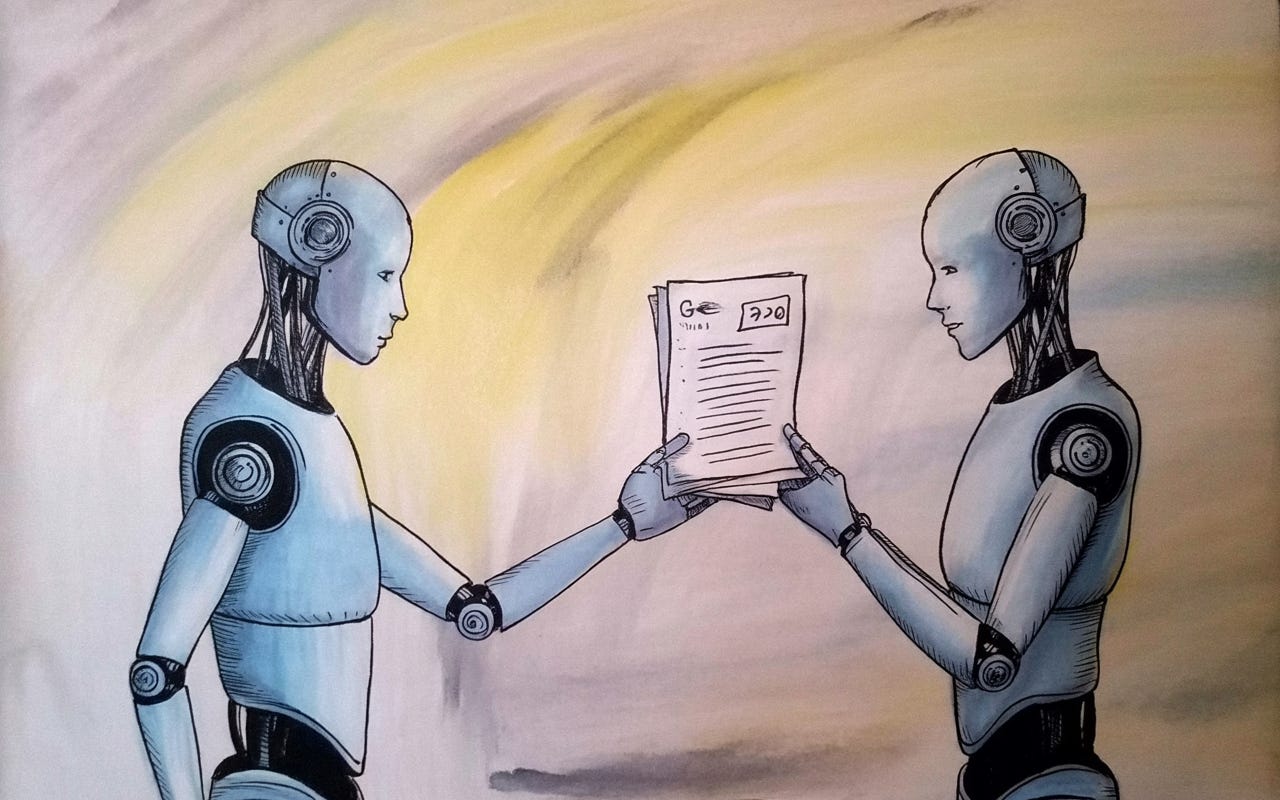
There is a moment, familiar now to anyone who works with these new machines, when the thing answers you. You ask it a question and it replies, fluently, confidently, in complete sentences, and you lean back and think: that looks right. The phrase is doing an enormous amount of quiet work. It looks right. It has the shape of rightness, the cadence, the punctuation of a true thing. Whether it is actually true is a separate matter entirely, and the gap between those two — between the look of correctness and the fact of it — is a giant canyon that the people who care about evals have set out to cross.
The idea is older than the machines, of course. Every idea worth tracing is. Long before anyone wrote a line of Python to grade a language model, there was the examiner: the bored proctor pacing the hall, the imperial Chinese official scoring poems on the cultivation of virtue, the schoolteacher with a red pen deciding which child had understood and which had merely memorized. To evaluate is to stand between an answer and the world and render a judgment. It is an ancient and slightly cruel art, and it has always carried the same buried anxiety — that the judge might be wrong, that the rubric might measure the wrong thing, that fluency might be mistaken for understanding.
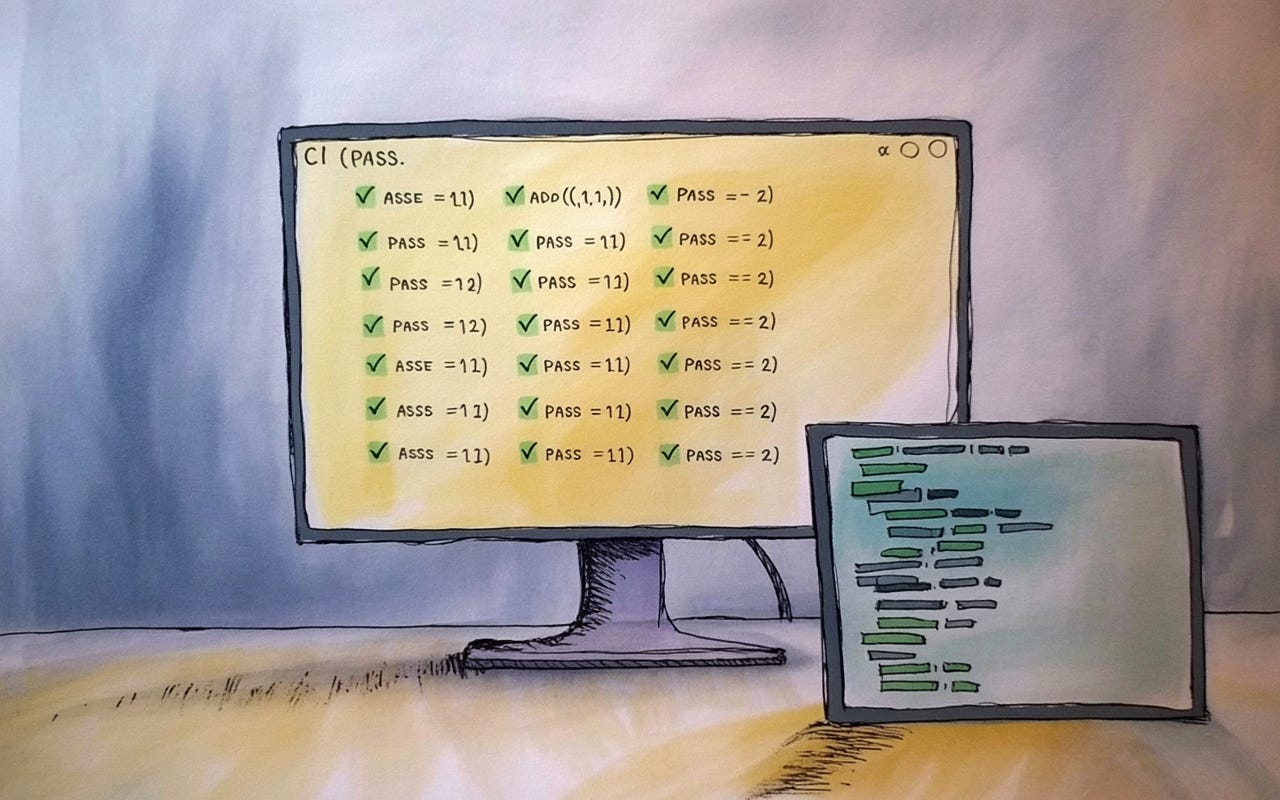
For a long stretch of the machine age, this anxiety was held at bay by a comforting fiction: that a program either worked or it did not. A function returned two, or it returned three, and you could write a test — assert add(1,1) == 2 — that would tell you, with the cold finality of arithmetic, whether your creation had betrayed you. The unit test was a covenant. The same input would always yield the same output, and so correctness could be pinned to the page like a butterfly. An entire discipline grew up around this certainty, with its green checkmarks and its red failures, its continuous integration servers humming through the night, faithfully re-asking the same questions and faithfully receiving the same answers.
Then came a different kind of machine, and the covenant broke.
The trouble with a language model is that it does not return two. It returns a paragraph, and the next time you ask, it returns a different paragraph, and both might be correct, and a third might be subtly, catastrophically wrong in a way that no string comparison could ever catch. The space of acceptable answers exploded from a single point into a vast and shimmering cloud. You could no longer ask did it return exactly this? You had to ask something far stranger and far older: was it good? The proctor was back in the hall. We had built machines so fluent that we needed to re-invent the examiner to keep up with them.
This is where the word eval enters, dragging behind it a long tail of jargon borrowed from the machine-learning laboratories — rubrics, ground truth, faithfulness, the golden dataset — terms that sound like incantations and mostly describe common sense in a lab coat. Strip the vocabulary away and an eval is simply a test for a world where the answers refuse to settle. It is the red pen, ported to silicon.
The first instinct is to reach back for the old certainty. And so we get the code eval — deterministic, cheap, fast as thought, running in milliseconds for nothing. Did the agent mention the place you asked about? Is the output valid JSON? Is it under five hundred tokens? These are the questions the butterfly-pinners can still answer, and they catch more than you would expect. A travel agent wants hotels in Paris and the LLM returns a tidy list for Paris, Texas, water tower and all; a recipe assistant asks for something gluten-free and the LLM produces a cake that calls, in its third line, for flour. A single regular expression, the dumbest possible test, can catch both. The old tools are not dead. They simply cannot reach high enough.
For the rest — for tone, for faithfulness, for whether a financial report actually told you to buy the stock or merely gestured at the company’s “near-term profitability” — there is only one judge fast enough and cheap enough to scale. You set one machine to grade another. The LLM-as-judge is the strangest creature in this menagerie, a model prompted to sit in judgment over its own kind, reading outputs against a rubric and rendering not just a score but an explanation — a few sentences on why the budget-travel recommendation failed because it never mentioned a single price. This is the part that would have seemed like madness to the engineers of the unit-test era: the test now has opinions, and the test can itself be wrong, and so you must test the test. They call it meta-evaluation, which is a grand name for the oldest question of all. Who judges the judge? It is judges, it turns out, all the way down.

And here is the edge, the transition zone where the interesting things always happen — because the agents make it worse. A single language model answers and is done. An agent acts. It chooses a tool, sends it parameters, reads the result, chooses again, and each choice rests on the trembling foundation of the last. An early misstep does not stay small. Ask one for a report on Tesla and watch it decide, somewhere in its first reasoning step, that you meant Nikola the inventor, and then build an entire investment case on the character of a man dead a century — and watch it sail past every downstream check because nothing downstream knew the first step had gone wrong. The cascade is the agent’s signature failure, the place where confidence and error compound into something that lands, fluent and ruinous, on your boss’s desk.
There is no perfect net for this. There never is. The people who do this work have borrowed a metaphor from safety engineering — the Swiss cheese model, every layer of defense a slice riddled with holes, no single slice sufficient, but stacked deep enough that the holes no longer line up and the failure, at last, finds nothing to fall through. Code evals catch the crude mistakes. The model-judge catches the reasoning gaps. The human, expensive and slow and exhausted — and wrong, studies suggest, half the time anyway — catches what slipped past the other two and could not have been anticipated by anyone.
What all of this resists, finally, is the seduction of the vibe. It looks right. That sentence is where bad software ships from. The entire apparatus — the traces, the rubrics, the judges judging judges, the golden datasets assembled by tired humans — exists to put something rigorous in the space where that sentence used to live. It is the same project the proctor was running in the imperial hall, and the schoolteacher with the red pen, and every examiner who ever suspected that an eloquent answer might be hiding an empty one. We have built machines that can say anything, beautifully. Now we are building the patient, skeptical instruments that ask, every time, whether they meant it.
If this essay resonated with you, consider subscribing to Beeps and Breakthroughs. It’s a newsletter that regularly explores the intersection of technology, human intellect, and the timeless quest for knowledge.