

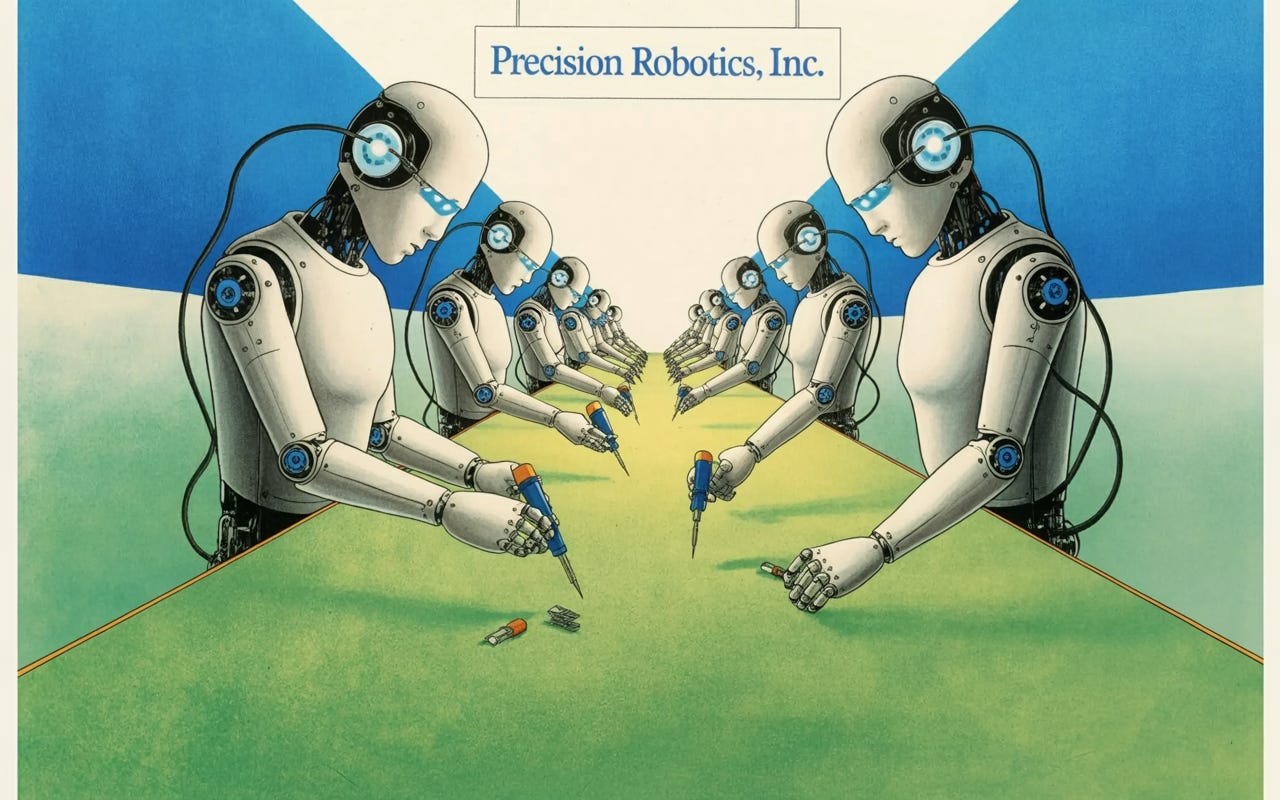
If you look closely at the current landscape—and follow the capital expenditure of giants like NVIDIA, Alibaba, and Tesla—you’ll see the next pivot coming. We are moving from AI that lives in a box to AI that lives in the world. This is the era of Physical AI.
At its simplest, Physical AI is the convergence of modern generative and multimodal models with robotics and real-world perception. For the last two years, the industry has been obsessed with models that generate pixels and prose. That is ephemeral AI, intelligence that speaks. Physical AI, by contrast, is intelligence that does. It takes those same reasoning capabilities and tethers them to 3D space, physics, and the cold, hard constraints of reality—things like collisions, friction, and the fact that a robot cannot occupy the same space as a warehouse shelf.
Today’s Physical AI represents the ultimate closed loop. This architecture is built on three technical pillars, beginning with high-fidelity perception. This is not just a camera; it is a sensor fusion of LiDAR, radar, and depth sensors that feed 3D perception models to construct a “world model” in real-time. This feeds into the second pillar: reasoning via Vision-Language-Action (VLA) models. This is the “Brain” that translates a multimodal command like “Move the pallet” into specific motor voltages. Finally, this results in adaptive action, moving us past “scripted” robotics. Instead of a robot following a pre-set path, a Physical AI agent adjusts its trajectory based on real-time sensory feedback.
You cannot build Physical AI in a vacuum, and the infrastructure stack requires two heavy lifts. First, you need digital twins and simulation. You cannot crash a thousand real trucks to train an autonomous driving stack, so you use physics-accurate 3D simulations to train and test policies at scale. Second, you need edge acceleration. Latency kills, literally. You cannot wait for a round-trip to the cloud when a robot is about to bump into a human. This requires high-performance GPU/ASIC platforms sitting directly on the machine to process perception and planning in real-time.
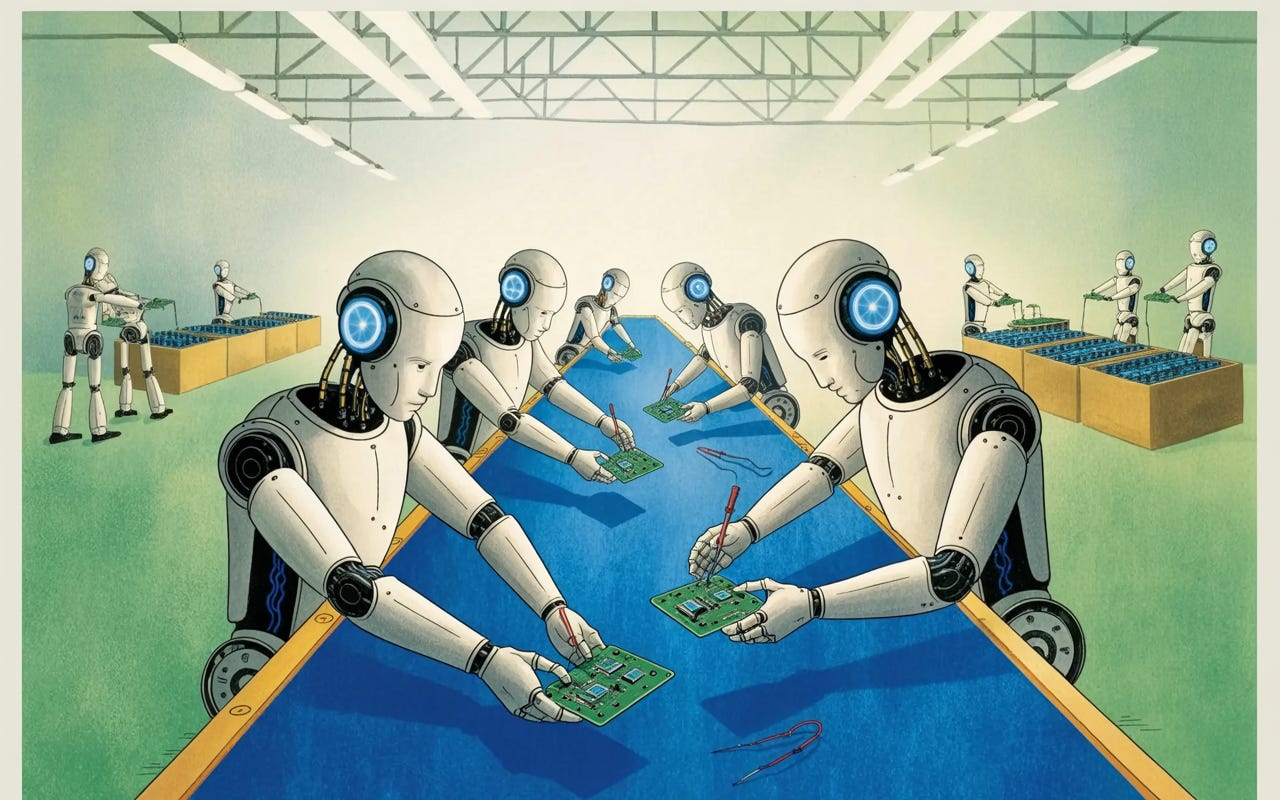
Phyiscal AI’s time has come. We finally have the onboard compute power to run rich perception models at the edge rather than in a data center. Furthermore, we are seeing a clear platform shift as the major players stand up dedicated Physical AI divisions, signaling that the plumbing is finally ready. Most importantly, there is a massive macro pull. With aging workforces and crumbling infrastructure, governments and heavy industry see Physical AI as the only viable lever for productivity in sectors where labor is tight and downtime is a million-dollar-an-hour problem.
The first wave of modern AI ha been about the mastery of symbols—organizing the world’s information. The next decade is about the mastery of matter—navigating the world’s physical reality. Winning at Chess proves machines can reason in their universe. Physical AI is about building machines that can thrive in ours.