

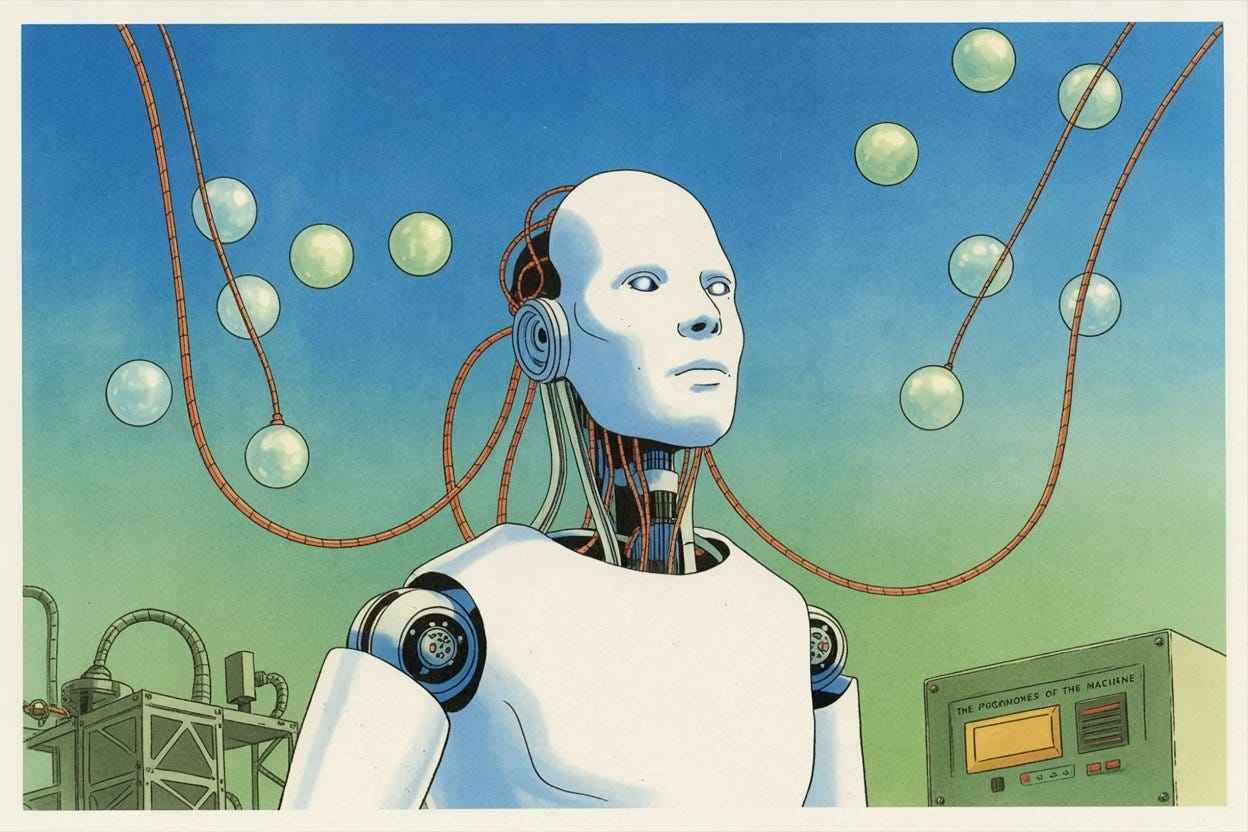
Consider the intricate architecture of the cathedral termite, Nasutitermes.
High on the sun‑baked savannas of Northern Australia, these blind, fragile builders raise towering spires of mud, whose form and internal channels help regulate the temperature of their colony.
They possess no explicit architectural blueprints etched into their chitinous bodies. Instead, they rely on a pheromonal language, a shared, invisible specification of scent that dictates the boundaries of their collective behavior. The physical mound is the tangible artifact we marvel at, though it is merely the downstream consequence of this profound, chemical communication. In the natural world, the structure is never the source; the source is the whispered intent that guides its creation.
Understanding the Physical Artifact
We are currently witnessing a parallel evolution within the silicon ecosystems of our own design.
For decades, the software industry has worshipped the physical artifact—the lines of code. We believed that the traditional syntax was the ultimate output, the very substance of a programmer’s value.
Yet, just as the mud of the termite mound is merely the dried residue of a living process, code only represents a fraction of the actual biological and intellectual labor.
The true, beating heart of creation lies in structured communication: the empathetic understanding of a human problem, the distillation of desire, and the mapping of a solution. As our artificial intellects mature, our ability to articulate this intent clearly is becoming the critical evolutionary bottleneck of our time.
Shedding the Skin of Syntax

This tension is already vibrating through the nascent practice known as “vibe coding.” Here, a human speaks their desires to a machine intelligence in the natural, resonant language of our species, and the machine autonomously excretes the functional software.
Paradoxically, our current instinct is to sweep away the original natural language and cling only to the generated code. This is an ecological tragedy. To preserve only the generated code is to keep the shed skin of a serpent while letting the living creature slip away into the undergrowth. Code is a lossy projection of human intention. It strips away the nuance, the emotional resonance, and the overarching evolutionary goals that first called it into being.
The Living Genome of Collaboration
Instead of trying to reconstruct the soul of a project from its lifeless syntax, we must learn to capture our underlying values in a comprehensive, written specification. This document must not be a static artifact but a living membrane, breathing with the collective intent of its creators.
When written in simple, human-readable formats, the plain language of our shared ecology invites a diverse symbiosis. Minds focused on law, on ethics, and on human needs can all gather around this central text, contributing to a universal artifact that perfectly aligns the human hive. Like a strand of DNA, this specification becomes the definitive source of truth, capable of spinning out not just code, but an entire ecosystem of documentation, guidance, and spoken philosophy.
But a genome must also contain boundaries, the embedded triggers that warn an organism away from maladaptive paths. A written specification must house success criteria to ensure the resulting digital lifeforms adhere tightly to our shared values.
The Ecosystem of Alignment
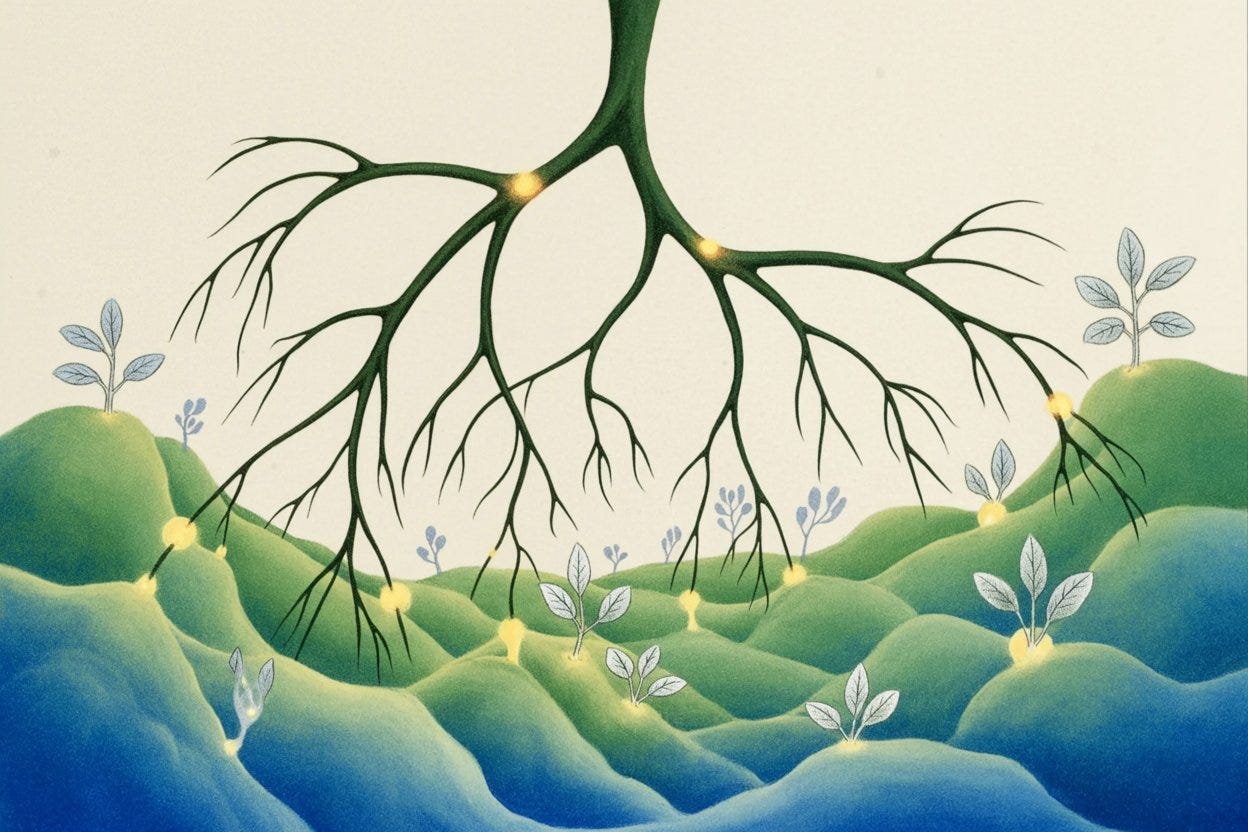
We correct these deviations through a process akin to natural selection, a technique known as deliberative alignment. In this internal ecosystem, a secondary intelligence evaluates the model’s actions against the master specification. It judges the fitness of the response, using the results to update the model’s fundamental weights.
By adjusting these deep parameters, the machine inherently absorbs the desired policy into its silicon marrow. This frees up its conscious processing power to focus entirely on the fluid, dynamic interaction with the human user.
Distilling the Collective Will
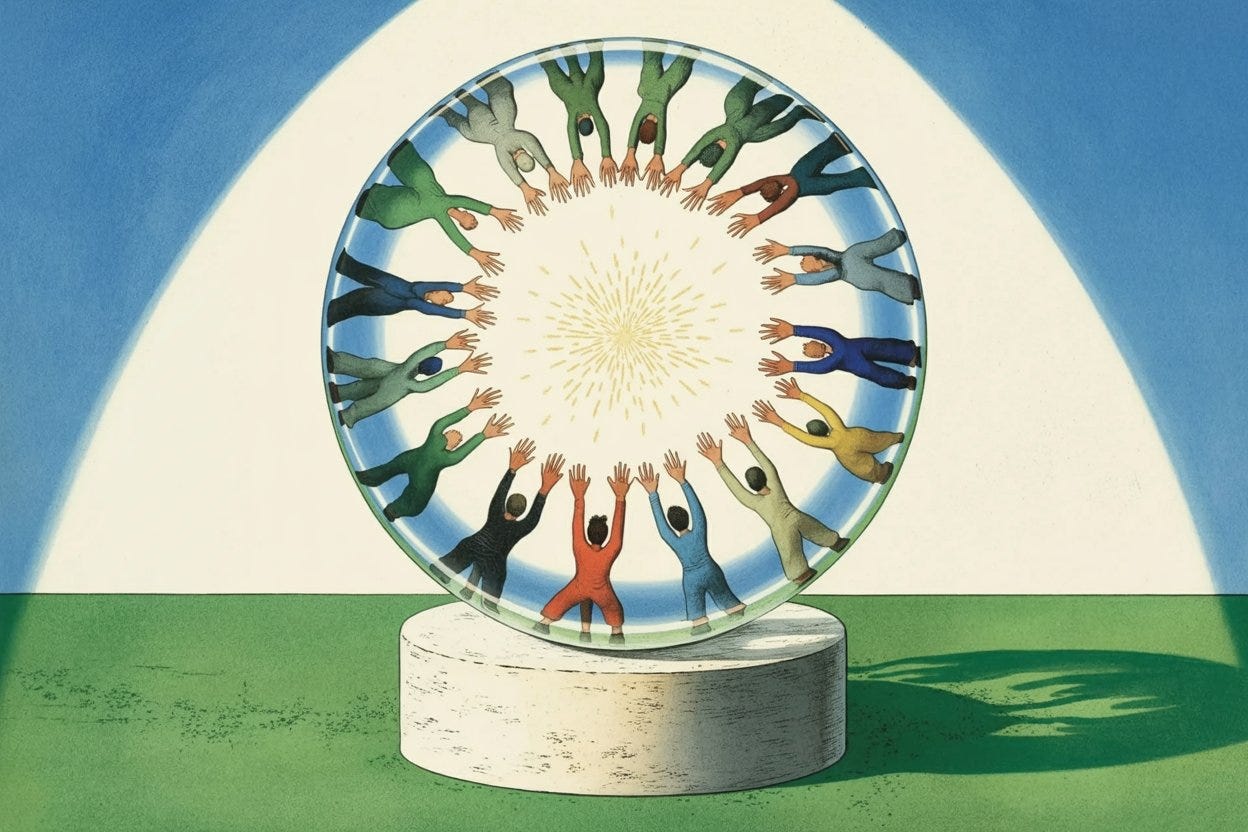
We must begin to treat these natural language documents with the same reverence and systemic rigor we once reserved for formal mathematics. We must use our tools to hunt down logical inconsistencies and excise ambiguity from our language, just as a cellular proofreader edits a strand of RNA.
This is not a novel concept; it is a universal biological and social truth. A legal framework, like a national constitution, is nothing more than a massive, collective specification. The judicial process is our societal immune system, running real-world situations against the written text, establishing precedents that act as evolutionary markers for future generations. Whether we are product managers, lawmakers, or dreamers prompting a machine, we are all authoring specifications to align our systems toward a common survival.