

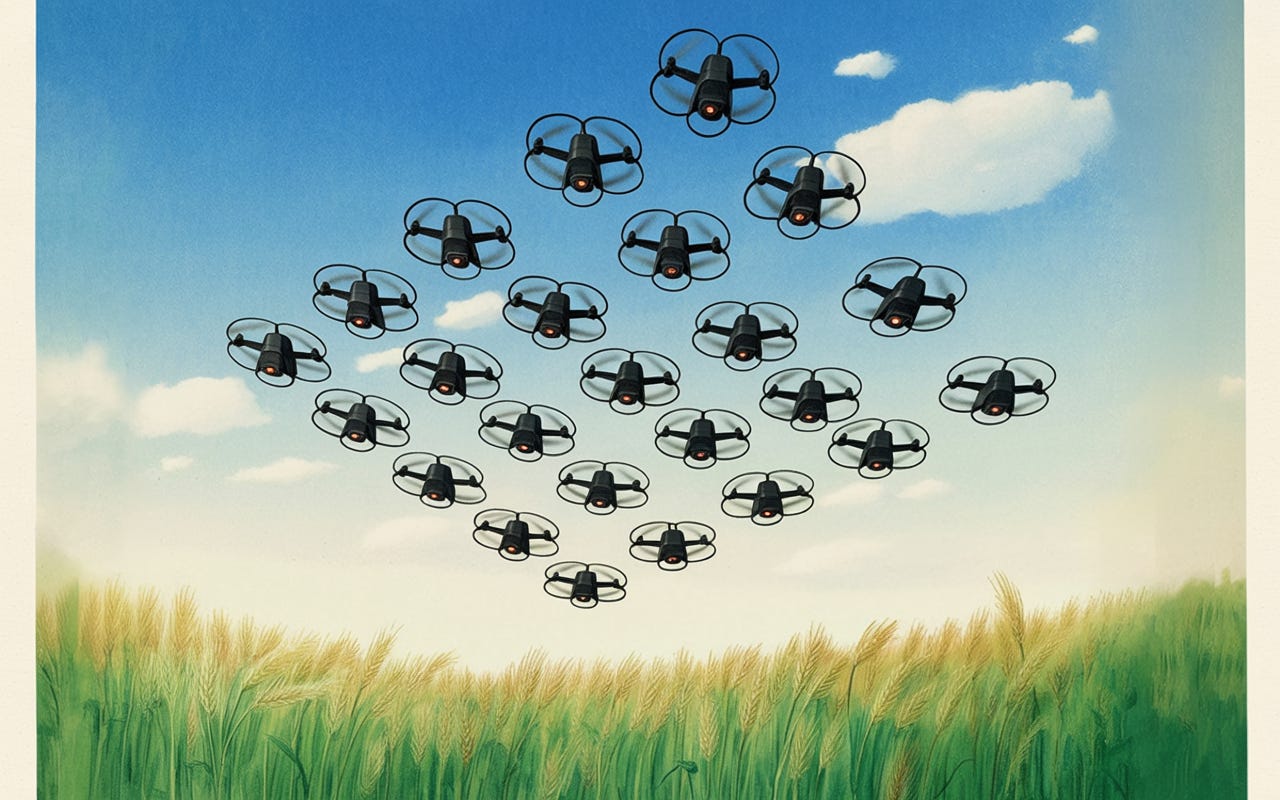
I stood in the crowd at the harbor, my neck craned skyward, watching three thousand LED-equipped drones synchronize into formation above the water. What had been individual points of light moments before suddenly coalesced into a massive phoenix, wings unfurling across the night sky. As the shape twisted and reformed, I realized I was witnessing a robotic airshow that would have been utterly impossible thirty years ago. Partly because the technology didn’t exist, but also because the philosophy behind it didn’t.
What I was witnessing was a massive shift in robotics from singular machines to agile, cooperative systems. Early robotic innovations in the 1980s were characterized by manipulator arms weighing hundreds of pounds, actuated by hydraulic motors and controlled by early multi-processor operating systems.
While these machines were engineering marvels of their time, requiring complex coordination between joints and pressure systems, they were fundamentally limited by the computational substrates and physical materials available. Over the decades, the engineering philosophy has shifted away from the notion that “bigger is grander” toward an appreciation for miniaturization and agility.
This shift toward smaller form factors enabled the development of micro-aerial vehicles capable of sophisticated coordination. These acrobatic robots emphasize distributed cooperation, where beauty and utility emerge from the ability of multiple small units to form three-dimensional patterns in mid-air and deform these shapes on the fly.
This capability allows for the creation of 3D objects in the sky, significantly enhancing the toolbox available to engineers. The focus has moved from the sheer physical dominance of a single robot to the emergent intelligence and distributed agility of swarms, where the collective behavior transcends the capabilities of any individual unit.
Defining True Autonomy in Aerial Systems
However, physical miniaturization is only half the equation; coordinating a swarm requires redefining how these machines operate on an individual level. A critical distinction in the market is the difference between remotely operated drones and truly autonomous aerial robots. The term “drone” is often considered pejorative in high-level engineering circles, as it implies a dumb device that follows a pre-programmed path or relies entirely on a human pilot.
True autonomy involves the ability to navigate and make decisions without external infrastructure. Many current systems, including military UAVs and commercial airliners, rely heavily on GPS, communication links, and human pilots. True autonomy is defined by the capability to operate when these infrastructures fail, including navigating without GPS, communicating without reliable Wi-Fi, and maneuvering without a prior map of the environment.
The technological leap required to achieve this level of localized autonomy was aided by Moore’s law and the automotive industry. The standardization of airbags in automobiles drove down the cost of accelerometers and Inertial Measurement Units (IMUs), making the sensors required for independent flight affordable and lightweight.
Armed with these accessible sensors, mechanically simple yet highly versatile platforms emerged.
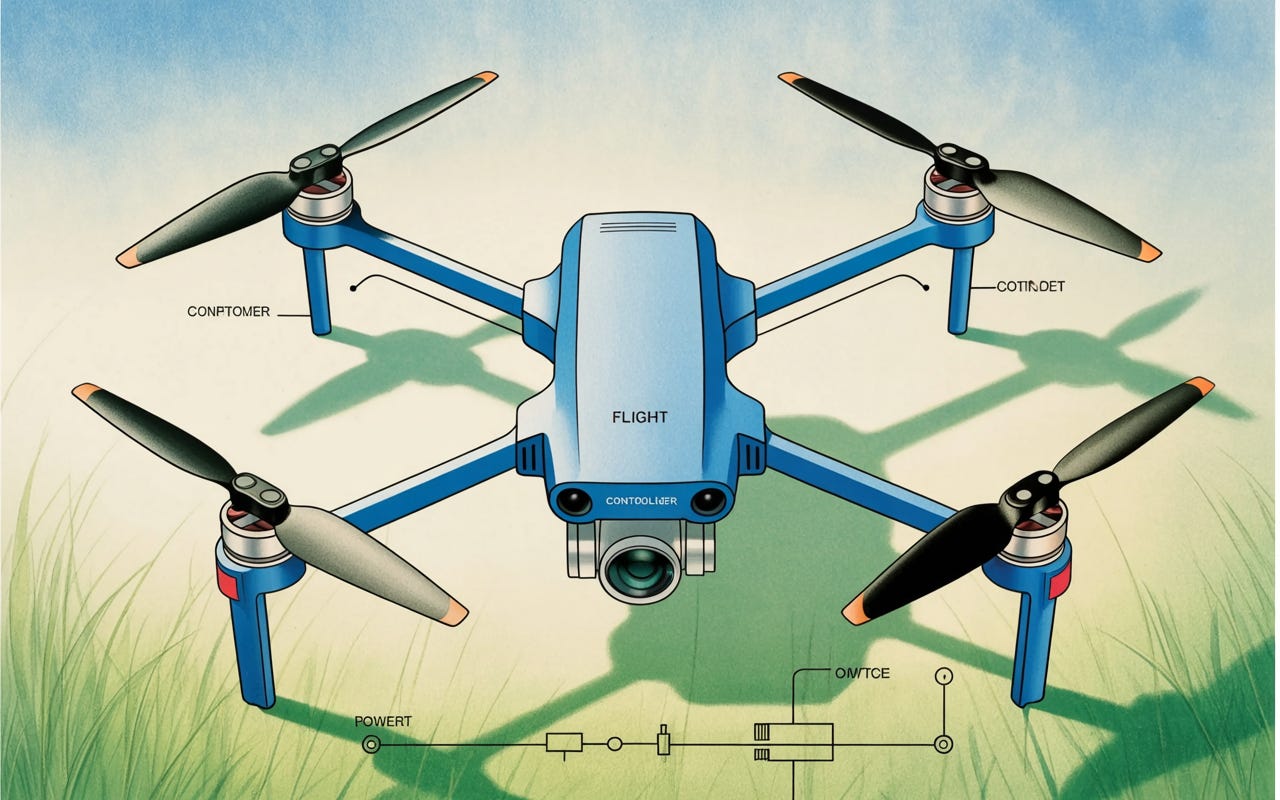
A quadrotor, for instance, utilizes four motors to generate thrust, relying on these onboard sensors to estimate acceleration, angular velocity, and position hundreds of times a second. This allows the vehicle to hover, change orientation, and execute complex trajectories by manipulating the RPM of its motors, creating a mechanically simple yet versatile platform.
Agile Systems & Real-World Applications
Achieving this kind of agile movement requires sophisticated trajectory planning that balances safety with efficiency. The robot must calculate smooth motions that do not violate safety constraints while optimizing for speed or energy consumption.
While there is significant industry hype surrounding machine learning and deep reinforcement learning, successful flight dynamics primarily rely on physics-based models rather than end-to-end learning. Modeling aerodynamics is notoriously difficult due to “micro-climate” effects—such as blades flapping at high speeds, ground effects, or being sucked toward a ceiling. Rather than attempting to model every variable, engineers use iterative learning to adapt to these conditions over time.
The future of robust autonomy lies in combining data-driven perception with model-based control systems to ensure reliability without requiring prohibitive amounts of energy. Once these fundamental control and perception challenges are solved, the application of small, nimble robot technologies naturally expands into sectors where agility and speed are paramount.
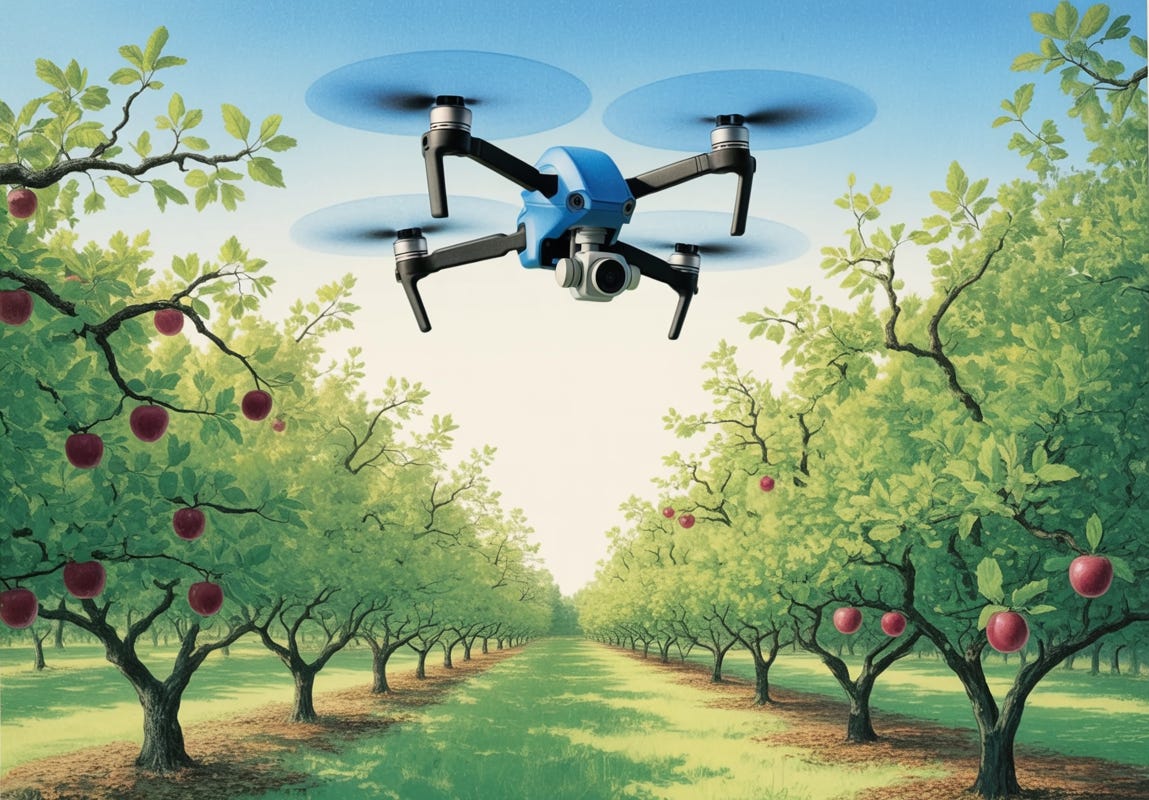
Beyond military use, agile robots are proving essential for “last-mile” delivery in congested cities and transporting medical supplies to remote, inaccessible regions. In agriculture, they navigate below tree canopies to monitor plant health and count fruit, tasks that require maneuvering in constrained spaces.
Ultimately, the evolution of lightweight sensors, physics-based control, and true autonomy does more than just create a highly capable individual robot—it provides the essential building blocks for collective intelligence. When a single quadrotor can rapidly calculate safe trajectories, adapt to micro-climates, and operate independently of external GPS or human pilots, the swarm becomes possible.
The hundreds of glowing drones I watched form a phoenix over the harbor were not just executing a coordinated light show; they were demonstrating distributed agility. As these technologies continue to expand into complex, real-world environments like agricultural canopies and congested city skies, the future of robotics becomes clear. We have left behind the era of the solitary, heavy-handed machine, entering an age defined by the dynamic, emergent power of the swarm.