

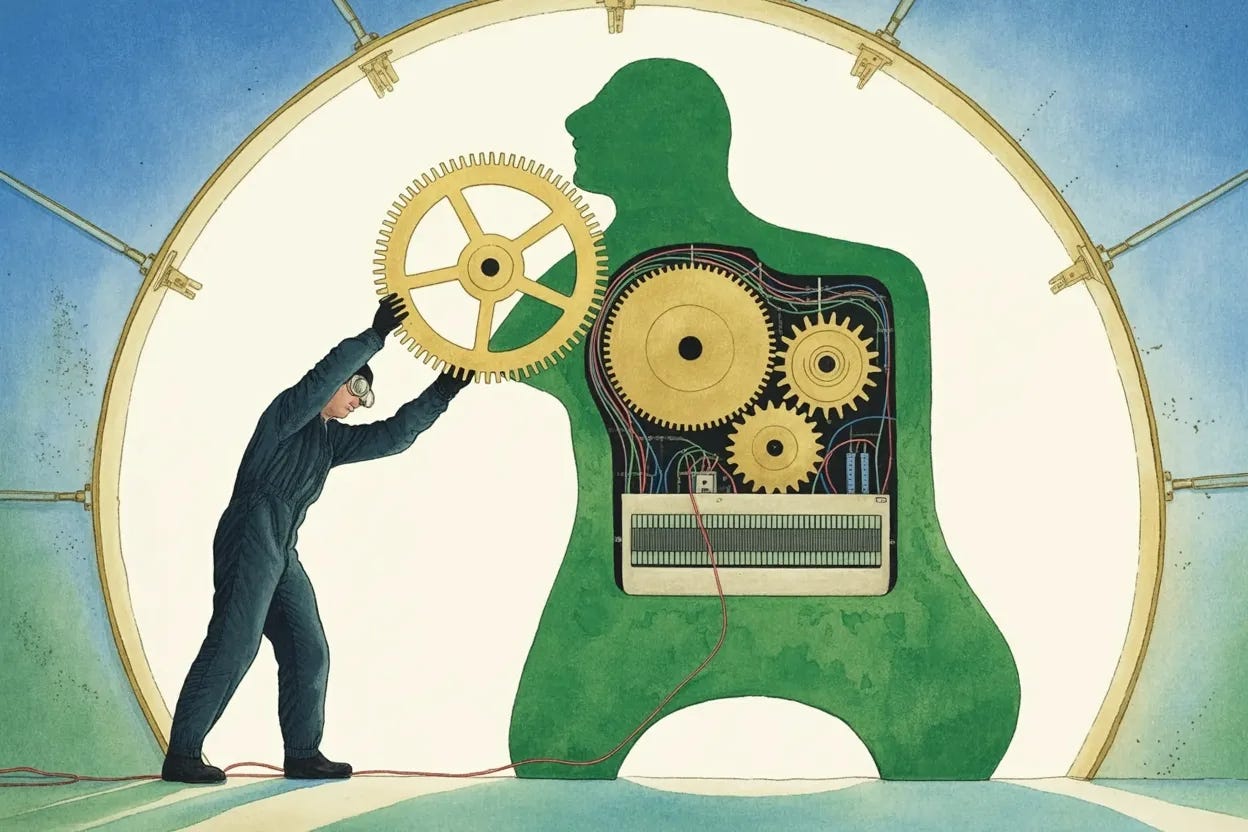
For a long time, writing software was an act of supreme and agonizing precision. It was clockmaking in the dark. In the early days of computing, when instructions were fed into mainframes via paper tape and punch cards, the programmer was forced to hold the entire physical state of the machine in their mind. Every byte of memory, every processor cycle, and every logical branch had to be anticipated, mapped, and strictly controlled. The machine was a blank slate of relentless determinism, and the human operator was its solitary god. A single misplaced character—an errant zero, a forgotten register—could bring the whole fragile architecture crashing down. The system was perfect, but human attention is not. The definition of a “bug” in those days was simply a collapse of human foresight, a moment where the complexity of the machine outstripped the capacity of the mind.
The Entropy of Unreturned Memory
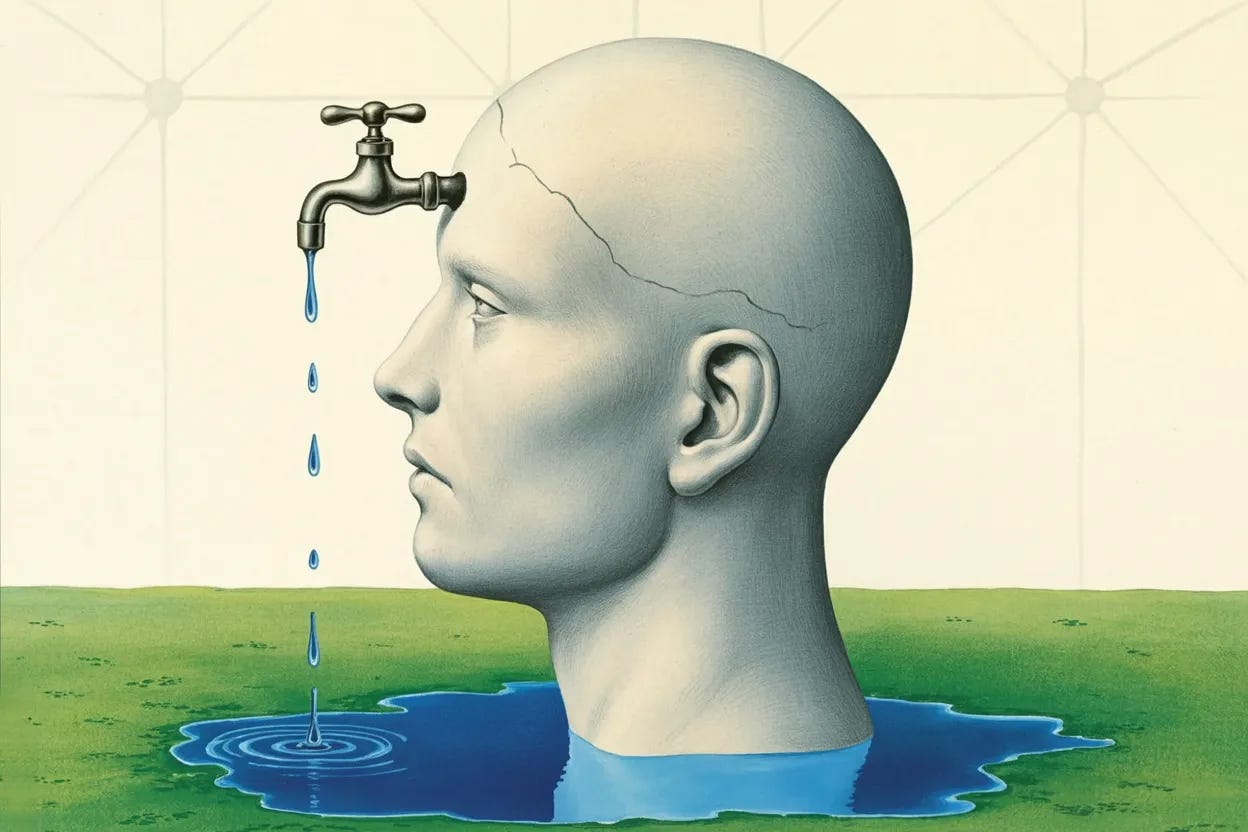
As the ambition of computer science grew, so did the friction between human limitation and machine potential. We built abstractions to bridge the gap. We created compilers to translate human-readable English into machine code, allowing pioneers like Grace Hopper to teach electrons to understand verbs. But beneath these towering abstractions, the programmer still had to manually manage the cruel physics of the computer and, specifically, the allocation of memory.
In the era of languages like C, managing memory was an exercise in localized physics. A programmer borrowed space from the system to hold data, and when that data was no longer needed, the programmer was duty-bound to explicitly hand that space back. It was a manual accounting of creation and destruction.
When they forgot—and they always forgot—the system suffered from memory leaks. It was computational entropy in action. The machine’s memory would slowly fill with the ghosts of dead data, a sludge of forgotten integers and stranded strings, until the system suffocated and froze. The programmer was forced to be both architect and janitor.
Garbage Collection and Cognitive Freedom
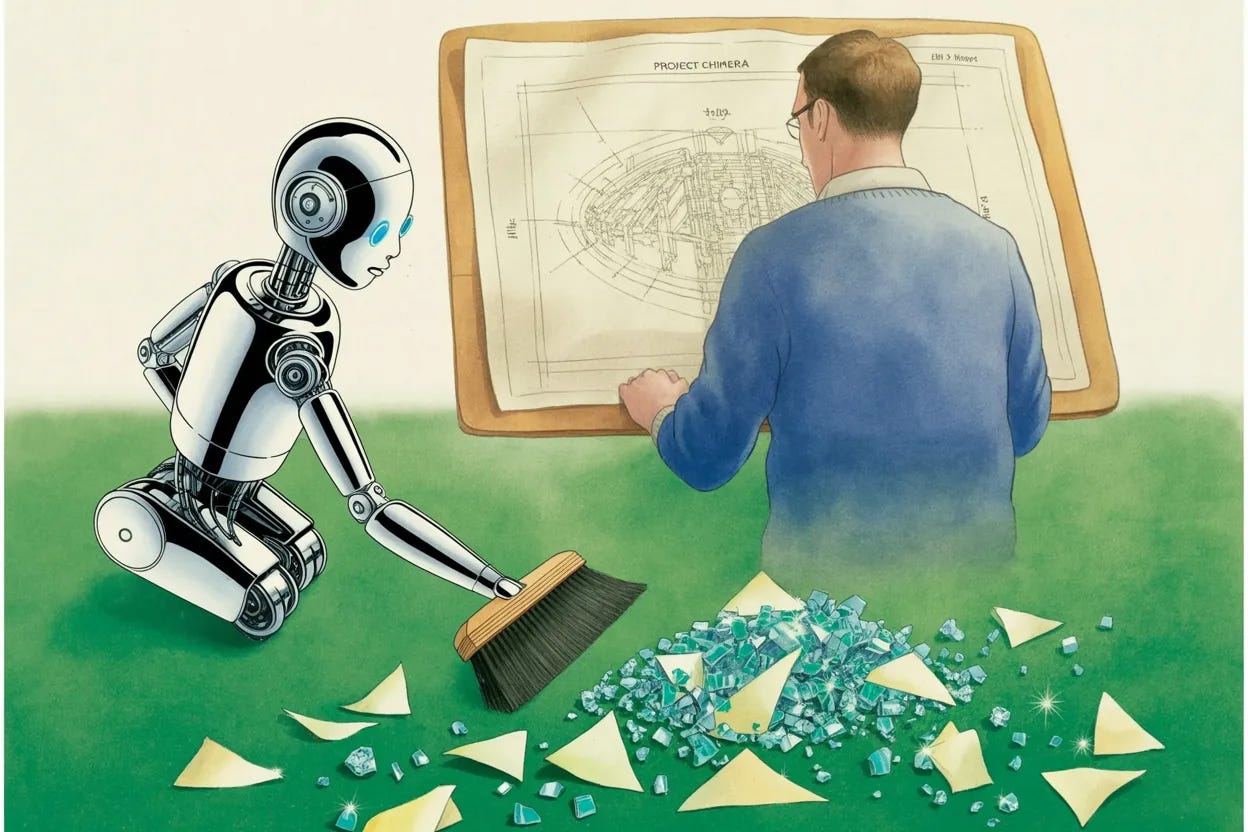
The paradigm shifted in 1959 when John McCarthy, working at the Massachusetts Institute of Technology, grew tired of sweeping the floors of his silicon mind. McCarthy was trying to build artificial intelligence; he was designing Lisp, a language meant to model human thought. He recognized that if developers were forced to constantly monitor the mundane reality of memory registers, they would never be free to model higher-order logic.
So, McCarthy invented a little routine. He called it Garbage Collection. It is a humble, almost comical name for a mathematical breakthrough. Garbage Collection was an automated process that lived underneath the main program. It constantly scanned the computer’s memory, looking for data that was no longer connected to anything useful. When it found this digital trash, it swept it away. It reclaimed the space.
The programmer did not have to write a single line of code to make this happen. They did not have to think about it at all.
McCarthy had pushed a complex, error-prone responsibility downward. He moved it out of the programmer’s hands and embedded it directly into the foundational environment. It was a fundamental transfer of responsibility. The “runtime”—that invisible, breathing envelope in which a program actually executes—absorbed the burden of memory management. The programmer surrendered absolute control over the hardware but gained an immense cognitive freedom. They no longer had to manage the machine; they only had to manage the logic.
When Code Becomes Too Vast to Read
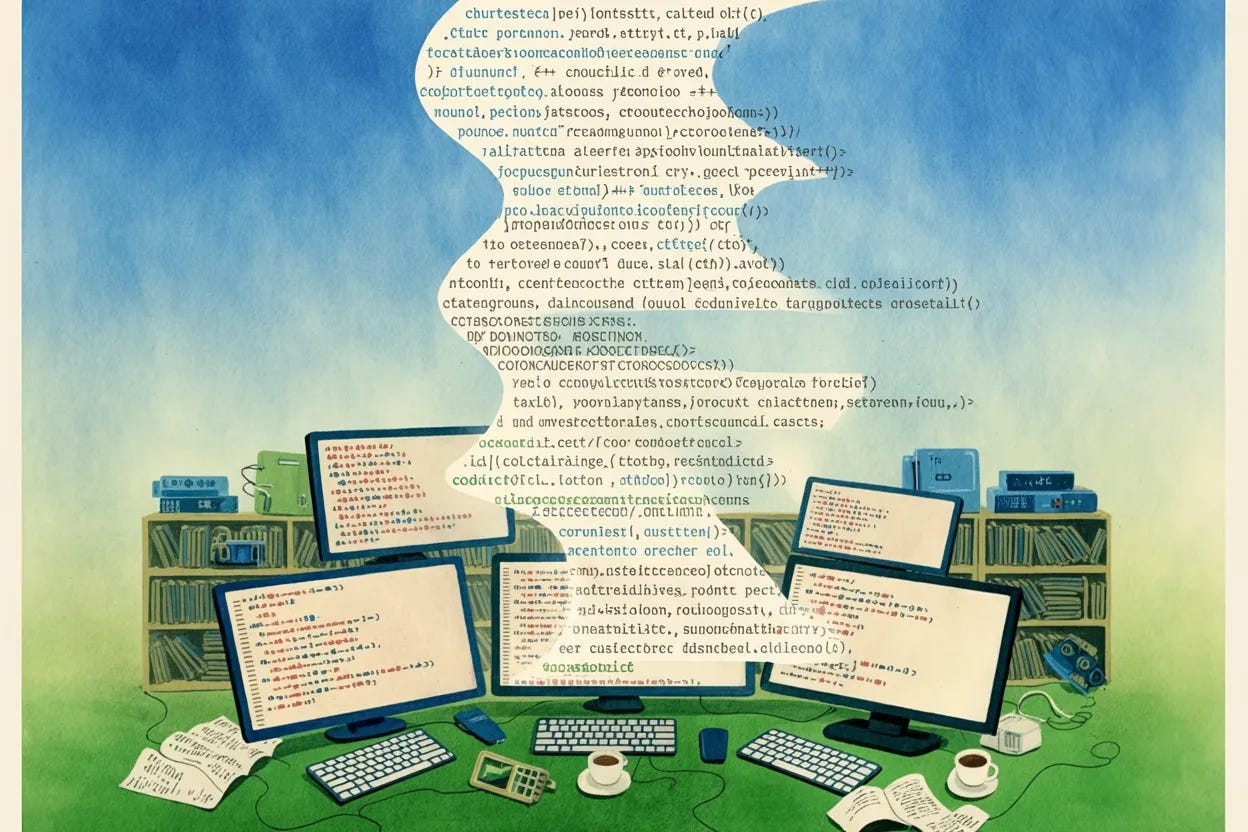
Today, we are about to witness a second great transfer of responsibility that echoes McCarthy’s garbage collection but operates at a vastly greater scale. We are no longer just automating memory; we are fundamentally redefining how we guarantee software correctness itself. The era of the artisanal programmer, hand-crafting every function and holding the entire system in their mind, is drawing to a close.
The catalyst, once again, is artificial intelligence. But this time, AI is not the theoretical goal; it is the restless, prolific engine writing the software. Silicon probabilistic models like large language models and coding agents are now generating application code by the yard. They pour out syntax in staggering volumes. This code is fast, highly functional, and fundamentally alien. It is woven from statistical probabilities rather than linear human logic. As these systems scale, the human developer can no longer read every line, let alone understand the labyrinthine dependencies holding it all together. The old dream of formal verification, of proving a program perfectly correct through exhaustive human inspection, is evaporating. The code is no longer a crystal; it is a dense, tangled thicket.
If we can no longer guarantee the absolute correctness of the code by reading it, how do we trust the systems that run our financial markets, our power grids, and our communications?
The answer is that the burden of correctness is shifting downward. It is sinking into the bedrock. Just as the responsibility for managing memory was pushed down into the runtime half a century ago, the heavy lifting of modern computing is now being pushed into the foundational software environment. System stability, durability, fault tolerance, and state coordination are no longer problems every application should have to solve alone.
The Runtime as a Shock Absorber
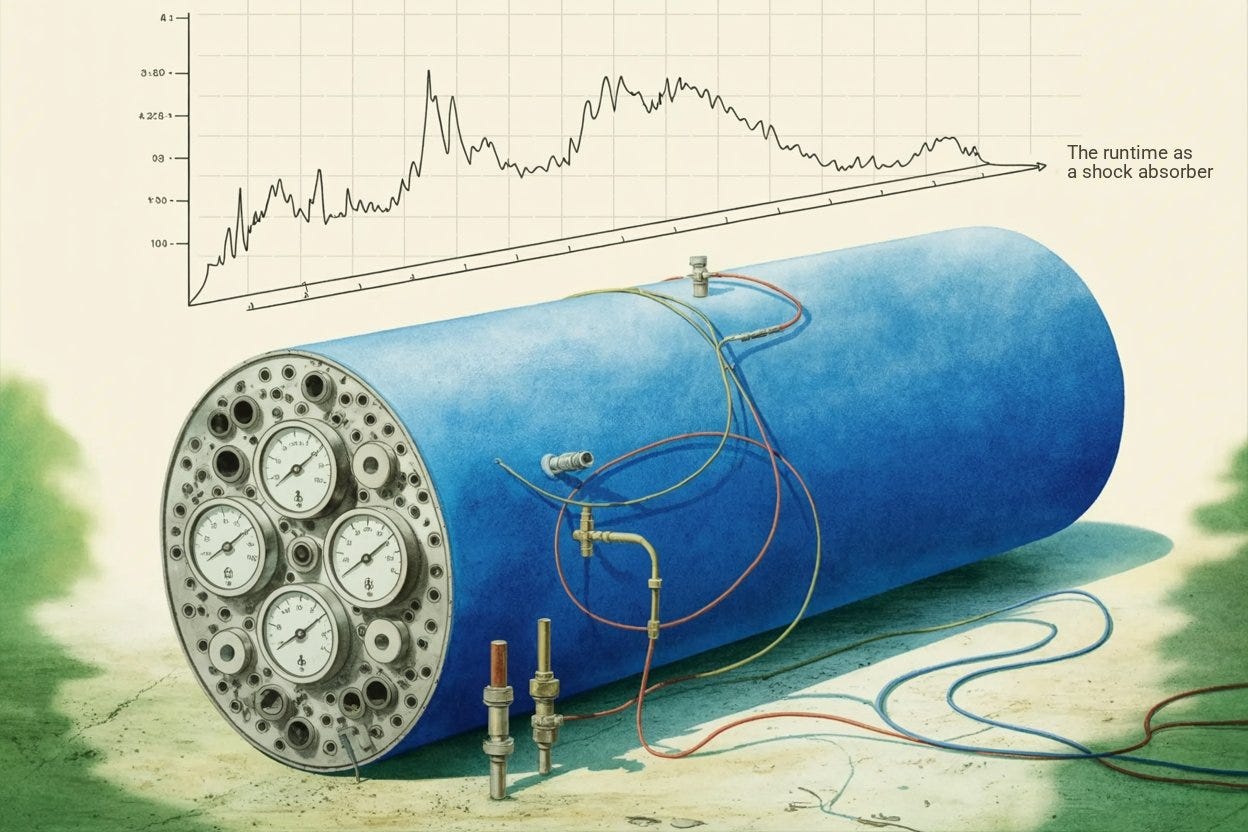
That shift becomes clearest when we look at the modern distributed application. It is a chaotic ecosystem of microservices, asynchronous calls, and unpredictable network latency. It is a system constantly poised on the edge of failure. In the traditional model, the application code itself had to absorb this turbulence. The developer had to write complex retry logic, manage distributed locks, and ensure that if a server died halfway through a transaction, the system could gracefully recover its state. It was the modern equivalent of manual memory management: tedious, error-prone, and a massive distraction from the actual purpose of the software.
Now, as AI takes over the generation of the primary application functions, the runtime layer is being hardened to absorb the chaos. We are building intelligent execution environments that act as shock absorbers for the unpredictable logic running above them.
When an AI-generated agent hallucinates a malformed request, or when a network packet drops into the void, or when a massive surge in traffic threatens to overwhelm the system, the application code no longer needs to know how to fix it. The runtime catches the fall. It automatically persists the state of the application to durable storage. It rewinds the clock if a transaction fails. It orchestrates the resurrection of crashed services without the application logic ever missing a beat. The runtime manages the arrow of time, ensuring that even if the code above is a probabilistic soup, the system’s progression remains strictly deterministic and reliable.
Escaping the Loom

This evolution is freeing developers from the tyranny of legacy code and the tangled plumbing of state management. The human operator is stepping back from the loom. They are no longer placing every thread; instead, they are designing the pattern and trusting the machine to weave it. By pushing the complex, entropic responsibilities of stability down into the runtime, developers are liberated to focus entirely on the horizon. They can dedicate their cognitive surplus to building higher-order, autonomous systems—specialized agentic platforms that reason, adapt, and interact with the world in real-time.
This is not a loss of discipline; it is an evolution of scale. The history of computer science is the history of pushing our anxieties down into the substrate. We taught the sand to remember. We taught it to clean up after itself. And now, as we surrender the authorship of the code to the machine, we are teaching the runtime to survive our own incomprehension. The ghost in the machine is no longer a bug to be hunted; it is the system itself, holding the center, keeping the chaos at bay while the mind is left free to dream.