

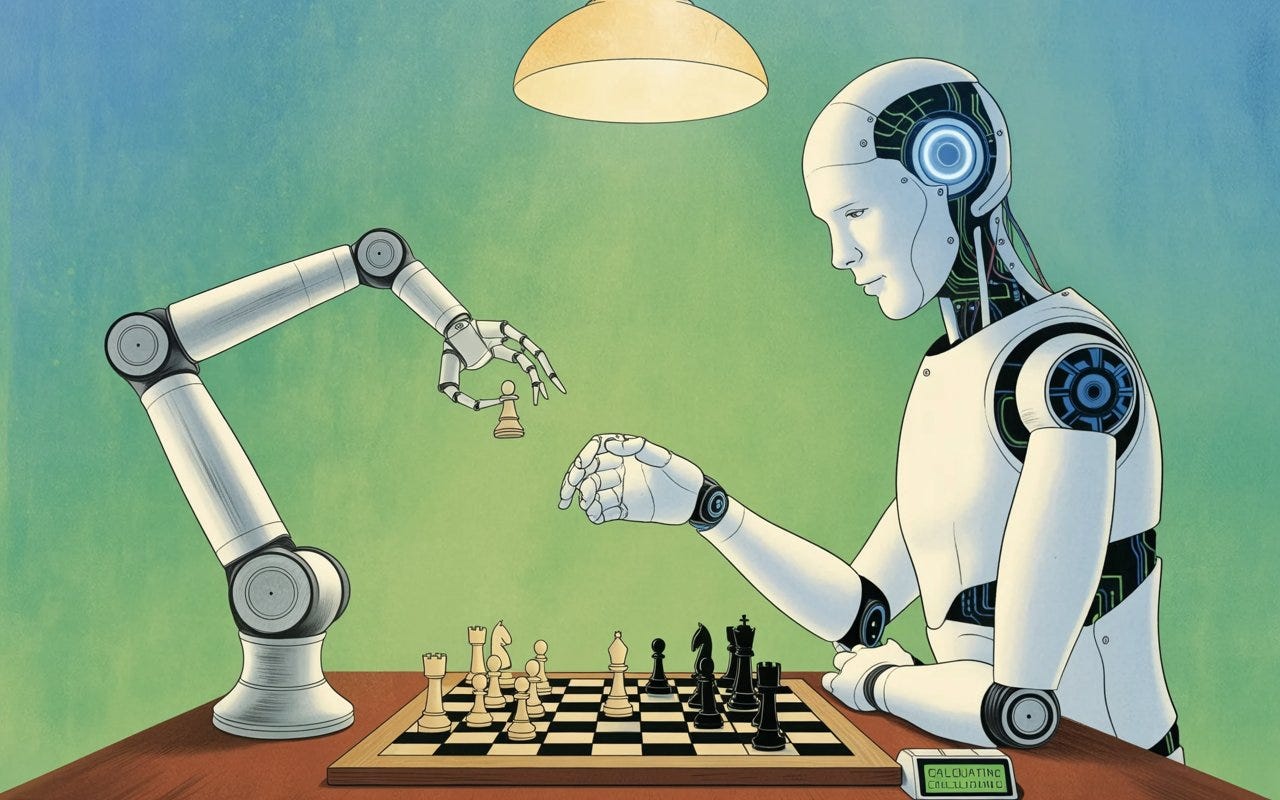
Some of the most impressive victories in artificial intelligence have happened in what we might call closed worlds.
Chess.
Go.
Video games.
These are environments where the rules are fixed, the boundaries are clear, and every possible move—no matter how numerous—exists inside a defined system. The number of possible Go positions exceeds the number of atoms in the universe. That sounds impossibly complex. But crucially, it’s still a finite, rule-bound complexity.
In these environments, AI has flourished.
Give a system enough examples, enough compute, and enough time, and it can learn to navigate that closed system with superhuman skill. This success has led to a tempting assumption: if AI can master a board game of astronomical complexity, then perhaps the real world is just a larger, messier version of the same thing.
Maybe reality is just a bigger board game.
But it isn’t.
Reality Is Not a Board Game
In contrast to the structured confines of a game, reality is characterized by “unknown unknowns.” It is messy, infinite, and perpetually surprising.
Consider the simple act of a robot loading a dishwasher. In a promotional video, the lighting is perfect, the dishes are standard, and the environment is static. But in a real human home, a towel might slip and fall on the floor, a plate might be chipped and sharp, or a pet might suddenly dart between the robot’s legs.
Many in the current industry respond to these failures by saying we need “more data.” The argument suggests that if we simply record enough edge cases, the robot will eventually know what to do when a towel falls. However, the real world is not a collection of edge cases; it is an infinite stream of unique events. No amount of data can perfectly interpolate a world where the underlying physics and social contexts are constantly shifting.
The Limits of Pure Data
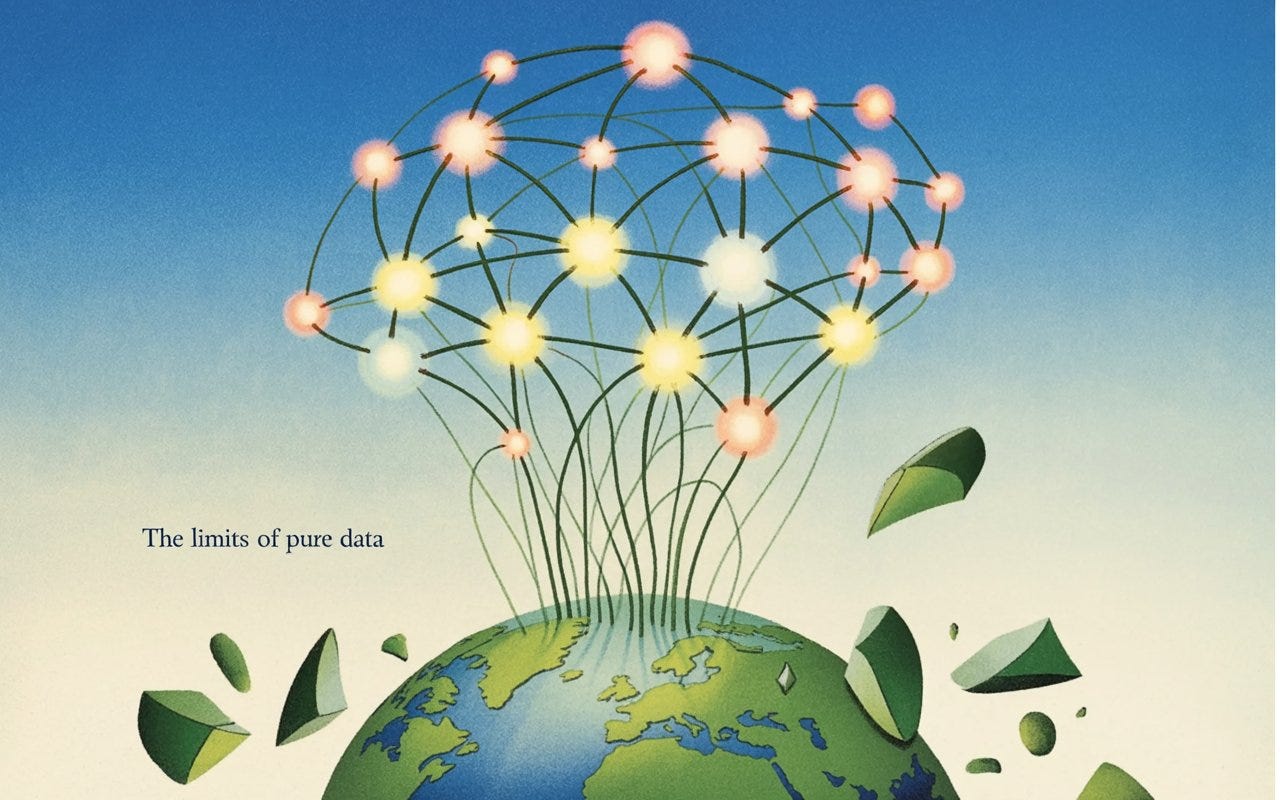
This is what distinguishes the physical world from a game. A game contains enormous complexity, but it is the complexity of a closed system. The real world contains uncertainty of a different kind. It includes events that were not explicitly anticipated, situations that were not neatly enumerated in advance, and interactions that unfold in ways no one scripted.
Humans do not navigate this variability by memorizing every possible scenario. We rely on general principles. We understand that gravity pulls downward, that fragile objects can break, that sharp edges can cut, and that living beings can move unpredictably. These principles allow us to respond to situations we have never seen before. They compress the infinite variety of experience into manageable structure.
The Intelligence of the Physical Body
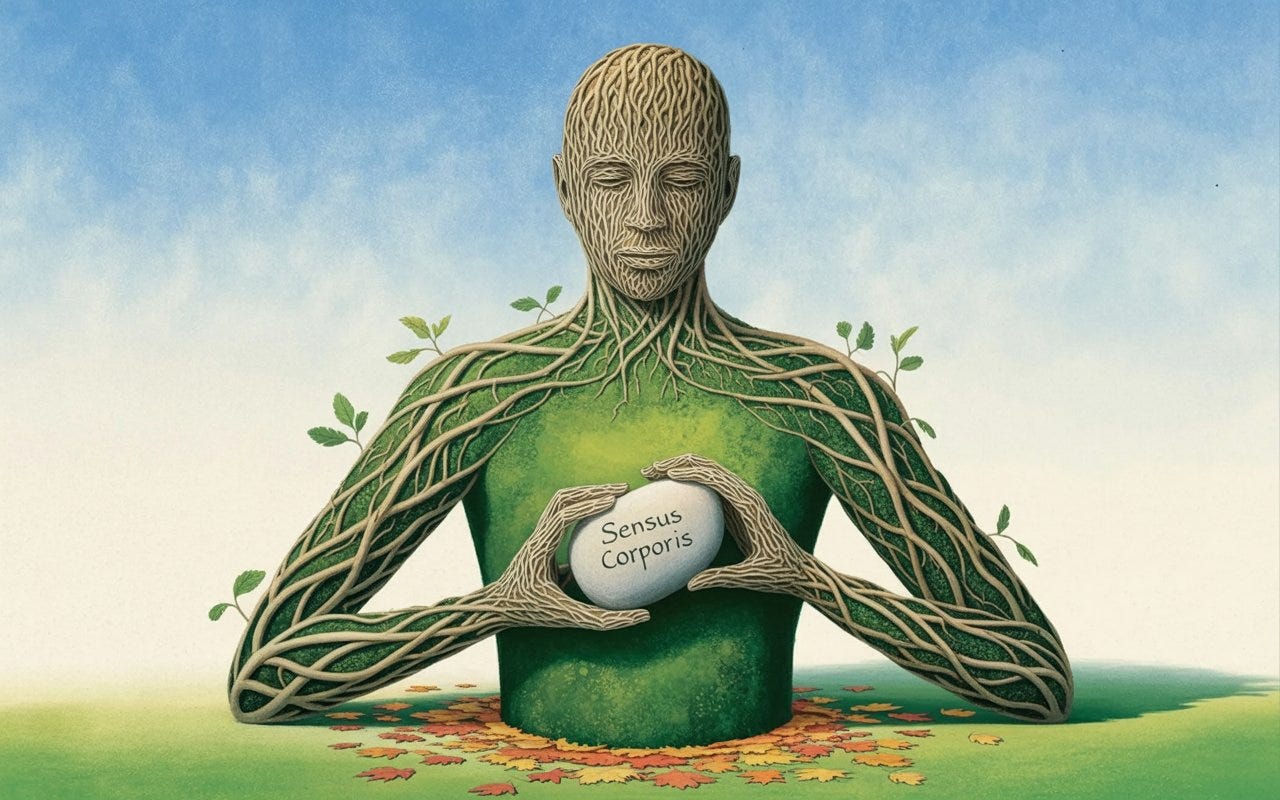
There is another, subtler reason humans cope well with the physical world. We do not solve every problem purely in our minds. Our bodies participate in the solution. When you grasp a slippery glass, you do not consciously calculate friction coefficients or torque. Your fingers flex and adjust automatically. Their compliance absorbs small errors. The physical design of your hand reduces the need for elaborate computation. The body itself performs part of the work.
When robots are designed to couple with their environment, such as using the surface of a table to stabilize an object or using the compliance of a mechanical hand to adjust to different shapes, they reduce the complexity of the real world into a manageable task.
This is often referred to as morphological computation. By allowing the physical body to handle the noise of reality, the “brain” of the robot is freed from the impossible task of calculating every microscopic variable.
Beyond Symbolic Illusions
General robotics is a seductive idea, fueled by our desire to see the miracles of LLMs translated into the physical realm. But the real world warns us that a mastery of symbols is not a mastery of matter.
Scaling up data and compute will undoubtedly produce more impressive demonstrations, but it is unlikely to produce true autonomy until we integrate the fundamental principles that biological intelligence uses to tame the Large World. The future of robotics lies not in building a brain that can memorize the universe, but in building systems that use the principles of physics, coupling, and mechanical computation to navigate the unknown. Only by moving beyond the data-driven illusion can we hope to create machines that truly “feel” at home in our messy, unpredictable reality.
The Challenge of Open Systems
The real world does not present itself as a cleanly defined puzzle waiting to be solved. It is dynamic, uneven, and occasionally unforgiving. Mastering a closed symbolic system is an extraordinary accomplishment. Learning to move comfortably through an open, shifting environment is a different kind of achievement altogether.
Winning at chess proves that machines can reason within a defined universe. Building machines that thrive in ours requires something more.